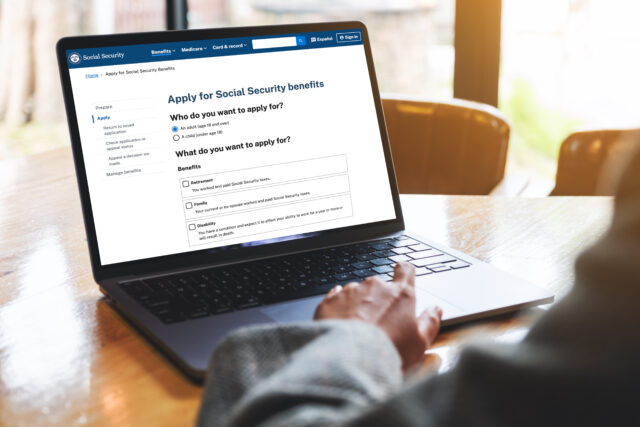
Updated October 17, 2026. To check disability status in New Jersey, first identify the program on your application: New Jersey Temporary Disability Insurance (TDI), an employer's approved private plan, or federal Social Security Disability Insurance (SSDI) or Supplemental Security Income (SSI). They do not share one claim tracker. Start with the agency or insurer named on your receipt, then check whether the outstanding issue concerns your application, medical evidence, payment, or appeal.
This guide uses official instructions checked October 17, 2026. SocialSecurityPayment.net is an independent information site, is not affiliated with SSA, and cannot access your claim, accept documents, or make a benefits decision.
Identify which New Jersey disability claim you filed
The word disability describes several programs. A New Jersey address does not tell you which one is handling your application. Before opening a login page, find your submission confirmation or most recent letter. Look for the program name, agency or insurance company, application date, and any claim reference. That small check can save a call to an office that has no access to your records.
New Jersey's TDI program replaces some earnings during a qualifying non-work-related illness or injury, with benefits potentially available for up to 26 weeks. Employers can use the state plan or an approved private plan. Ask payroll or human resources which arrangement covers your employment if your paperwork does not make it clear.
State TDI, an employer's private plan, or federal benefits
| Your paperwork identifies | Start your status check here | What to keep beside you |
|---|---|---|
| New Jersey state TDI | The official NJ My Leave Benefits TDI page | State claim receipt and latest notice |
| An employer's private disability plan | The insurer or plan administrator identified by your employer | Carrier claim number and employer details |
| Social Security SSDI or SSI | SSA's application or appeal status service | Federal filing information and SSA correspondence |
| A different program, such as workers' compensation | The program named on that claim | The decision or referral explaining responsibility |
SSDI is a federal monthly benefit tied to insured work history. SSI considers limited income and resources along with disability, blindness, or age 65 or older. An adult applying for disability benefits faces a different medical standard from a worker seeking temporary recovery leave. SSA's duration standard generally requires a qualifying condition expected to affect work for at least a year or result in death; a condition need not literally be permanent.
For example, someone recovering from surgery may have a state temporary claim while another person with a longer-lasting impairment has a federal claim. The similar everyday description does not make their receipts interchangeable. If you have filed both, keep separate folders and label each question with its program before contacting anyone. Approval under one program does not establish eligibility under the other.
A useful first note is: “I submitted a state TDI application on this date, and this is the notice I received.” That gives a representative something concrete to locate. “I applied for disability in New Jersey” leaves the most important routing question unanswered.
Check a New Jersey state TDI claim online
Open the official New Jersey TDI page and use “Check claim status” under access to an existing claim. Starting from that public page helps you reach the current state service instead of a saved search result for another benefit. Have your own account information available and follow the secure site's prompts.
Compare what you see with the application you intended to submit. Write down the displayed message and date, then open or locate the related correspondence. If you only saved an unfinished application, find the completion instructions before assuming a claim is under review. Do not submit a second application simply because the first one has not changed: New Jersey warns that sending a paper or fax duplicate after applying online can delay processing.
Match the notice to the next action
New Jersey's official form lookup explains the letters that accompany a claim. These common codes help distinguish a receipt, a request, and a decision:
- C05: The state has recorded the claim. Keep it; receipt does not mean approval.
- C10: Information from the claimant is missing or inconsistent. Answer the specific questions requested.
- M10: The medical provider needs to address missing or conflicting medical information.
- D10: An eligible determination provides benefit details, including the weekly rate and maximum.
- D30: An ineligible determination explains the denial and appeal information.
Put the letter beside your own records before responding. If the issue is a work date, use your calendar or employer records to establish the correct date. If the issue is medical certification, forward the actual request to the provider's forms staff. A general message saying that you are still waiting may leave the specific missing item unresolved.
Follow up on medical certification and continuing benefits
The medical portion is a separate handoff. New Jersey's provider instructions explain that an online applicant gives the provider a sheet with a unique Form ID. The provider uses it for the medical statement and receives a submission confirmation. Ask whether the office received the correct instructions and completed the submission, rather than assuming that handing over your personal application finished the process.
A practical follow-up note can include the date you delivered the instructions, the staff member who handled them, and when the office says it submitted the certification. Keep that note with your claim documents. It can help resolve a later disagreement about whether a document was sent, without trying to interpret a diagnosis or change the provider's medical judgment.
For an already approved claim nearing its authorized end, use the state's extension or ending instructions. The P30 notice supplies the Form ID required for that online task. An initial approval does not authorize an unlimited recovery period. Check the authorized dates, arrange any requested continuing certification, and report recovery or return to work through the appropriate process.

Check SSDI or SSI through Social Security
For a federal application, start at SSA's application or appeal status page or your personal my Social Security account. SSA supports Login.gov and existing ID.me accounts for sign-in. Successfully logging into an identity service is only the access step; continue to the SSA service to view the federal claim.
According to SSA's status FAQ, available information can include the filing date, current claim location, servicing office, hearing details, and a re-entry number for an incomplete application. Those details answer different questions. A filing date helps identify the application. A location tells you where it is being handled. A hearing appointment requires attention to that appointment; it does not say what the eventual decision will be.
Save a dated note of the information you can see, especially any requested action. If an expected decision estimate appears, treat it as an estimate. A pending application may remain at the same broad stage while evidence is being gathered. Comparing your screen with another person's screenshot cannot establish how many days you have left or whether your application will be approved.
If you are helping a relative, keep the account owner's access separate from your own. Ask SSA about the appropriate process when the claimant's record is not available to you. For a child's SSI application, do not assume a parent's personal retirement account will display the child's full file. Have the child's filing information ready when you contact SSA.
Why a New Jersey disability examiner may contact you
Federal applications can involve a state agency without becoming state TDI claims. SSA's determination process uses field offices for nonmedical requirements and Disability Determination Services for medical development and initial disability decisions. A New Jersey examiner may request records or arrange an examination. SSA still handles the federal benefit process, including outstanding nonmedical issues and payment calculations after a favorable medical finding.
Keep examiner correspondence in your federal folder. When a request names a hospital or treatment period, ask the provider's records department about that exact request. A useful question is whether records for the specified dates were sent to the named office. “My doctor says I am disabled” does not confirm that the examiner has the evidence needed to evaluate the federal claim.
If your address or phone number changes, tell the agency through its official process so a request does not go unanswered. Our separate Social Security application-status guide explains the broader federal workflow; the key New Jersey distinction is that DDS medical review and TDI leave benefits remain separate tracks.
Get help when the status is missing or unchanged
Choose a contact based on the problem you need resolved. Being unable to sign in is different from finding no submitted application, and both differ from a recorded claim awaiting evidence. Describe the actual obstacle so the person helping you can distinguish account access from claim processing.
For New Jersey state TDI, the official contact page lists 609-292-7060, Monday through Friday, 8 a.m. to 4:30 p.m., except holidays. The same page provides separate routes for private-plan questions and Disability During Unemployment. If your letter identifies one of those units, use its listed contact. An unemployment-related disability referral does not mean that the ordinary unemployment status page will answer every question about it.
For federal benefits, SSA's automated status service is available at 1-800-772-1213 around the clock; request application status. The TTY number is 1-800-325-0778. To speak with a representative, SSA lists weekday hours of 8 a.m. to 7 p.m. local time. Automated availability does not mean that a human claim examiner answers at any hour.
Before contacting either program, prepare a short record you can read from:
- The program and date you applied, with the receipt available.
- The exact status message or notice code that concerns you.
- The last requested item, when you sent it, and the submission confirmation if available.
- The specific question: whether the claim was received, whether a document is missing, or which office now handles it.
During the conversation, write down the date, the unit you reached, and the next action described. Ask where to send any requested document and how to confirm receipt. Repeat an unfamiliar address or form name back to the representative. A clear note makes a later follow-up easier than reconstructing several calls from memory.
If identity verification is the obstacle, use the account provider's support reached through the official agency site. New Jersey explains that its staff cannot access your ID.me account. Keep passwords and security codes private; a discussion about your claim does not require posting them in a public forum.
A status that has not moved does not establish that a claim was lost. Conversely, a promised follow-up that has passed deserves a specific inquiry. Use the date and request in your own correspondence to explain why you are contacting the agency, rather than relying on another applicant's processing time.
Separate approval, payment and appeal questions
Once a decision appears, read the full notice before switching from application tracking to payment tracking. Identify the program, the period covered, the benefit amount, and anything still required. If you filed more than one claim, do this separately for each. A favorable result on one application cannot tell you the outcome of another application sitting in a different system.
Keep three dates distinct in your notes: when the agency received the application, when it made a decision, and when it issued a payment. These dates answer different questions. A representative helping with a missing payment will need payment details; someone locating an application needs filing details. Combining them into a single “approval date” makes troubleshooting harder.
A payment calendar does not establish your first deposit
For a state-plan TDI payment, New Jersey's payment guide explains its prepaid debit card arrangement. It says funds should be available within three business days of the payment date. The Department of Labor processes benefits, while the card provider handles the card account. Check whether the state actually issued the payment before treating a zero card balance as a denied claim.
If the state shows an issued payment but you cannot access the card, use the card support information linked from that official guide. If no payment was issued, ask the claims unit what remains outstanding. People covered by private plans should follow their carrier's payment instructions; the state's card description is not a promise about an employer's insurer.
For federal benefits, use SSA's personal payment information together with your award notice. A public Social Security payment calendar explains recurring dates but cannot determine your first award payment or any past-due amount. Medical review completion can precede the remaining work needed to establish and calculate federal benefits.
If an established electronic Social Security payment is missing on its scheduled date, SSA says to contact the financial institution first, then SSA if the issue remains unresolved. Our missing-payment guide covers that problem. It is a different task from asking when a pending disability application will be decided.
Use the appeal instructions for the program that decided your claim
A denial requires attention to the decision and its appeal instructions, even if you are still trying to understand an online status message. New Jersey's TDI appeal page lists 21 calendar days from mailing for ordinary claimant appeals and a different period for a demand-for-refund appeal. SSA's reconsideration page lists 60 days after receiving its decision. Do not apply the federal period to a state decision or assume every state notice uses the same deadline.
Read the notice promptly, identify the correct appeal route, and preserve confirmation of what you submit. A call asking for an explanation is not something to rely on as proof that you filed an appeal. If instructions are unclear or you are late, contact the deciding program promptly about the available process rather than waiting for another status update.
For a private-plan decision, begin with the carrier's notice and the state's private-plan assistance route when needed. Keep the original decision and your response together. That record lets you explain the disagreement precisely: the reason given, the information you believe resolves it, and the review you requested.
Loading comments...