
Updated August 26, 2026. The major Social Security changes for 2026 are no longer “coming”—they are in effect. The confirmed updates include a 2.8% cost-of-living adjustment (COLA), higher limits for wages subject to Social Security tax, higher retirement earnings-test thresholds, a higher amount needed to earn one work credit, new federal SSI maximums, and a higher standard Medicare Part B premium. These changes affect current beneficiaries, people who work while claiming retirement benefits, SSI recipients, and workers who are still building a Social Security record.
The headline numbers do not tell everyone what will arrive in a bank account. A person’s gross benefit is based on an individual earnings or eligibility record, while Medicare premiums, tax withholding, overpayment recovery, garnishment, or other account-specific adjustments can change the net deposit. The safest reference for a personal amount is an SSA notice or the Message Center in a secure my Social Security account.
This guide uses the SSA 2026 COLA Fact Sheet and other current government sources to explain what changed, who each rule affects, and what did not become a new rule. It is an independent explanation of public information, not an SSA account service or personalized financial, tax, or legal advice.
2026 changes at a glance
Most of the widely reported 2026 changes are automatic annual adjustments. The COLA follows inflation as measured under federal law, while the taxable maximum, work-credit amount, and earnings-test limits generally move with national wage measures. Medicare sets its own annual costs. That distinction matters: a higher threshold is not necessarily a benefit increase, and a higher gross benefit does not necessarily produce the same percentage increase in take-home income.
| Item | 2025 | 2026 | Who it mainly affects |
|---|---|---|---|
| Social Security and SSI COLA | 2.5% | 2.8% | Current Social Security beneficiaries and SSI recipients |
| Maximum earnings subject to Social Security tax | $176,100 | $184,500 | Workers and employers, especially people earning above the prior wage cap |
| Earnings needed for one work credit | $1,810 | $1,890 | Workers building insured status; no more than four credits may be earned in a year |
| Retirement earnings-test limit: under full retirement age all year | $23,400 | $24,480 | People claiming retirement or survivor benefits before full retirement age while working |
| Earnings-test limit: year full retirement age is reached | $62,160 | $65,160 | Only earnings before the month full retirement age is reached |
| Federal SSI maximum: eligible individual / eligible couple | $967 / $1,450 | $994 / $1,491 | SSI recipients before countable-income reductions and state supplements |
| Standard Medicare Part B monthly premium | $185.00 | $202.90 | Most Part B enrollees; some pay a different amount |
Read the table as a map, not as an estimate of your check. For example, the $184,500 figure is a payroll-tax wage cap, not a maximum retirement benefit. The $24,480 figure is an earnings-test threshold, not a general income limit for everyone on Social Security. And the SSI figures are maximum federal payment standards before SSA applies countable-income and living-arrangement rules.
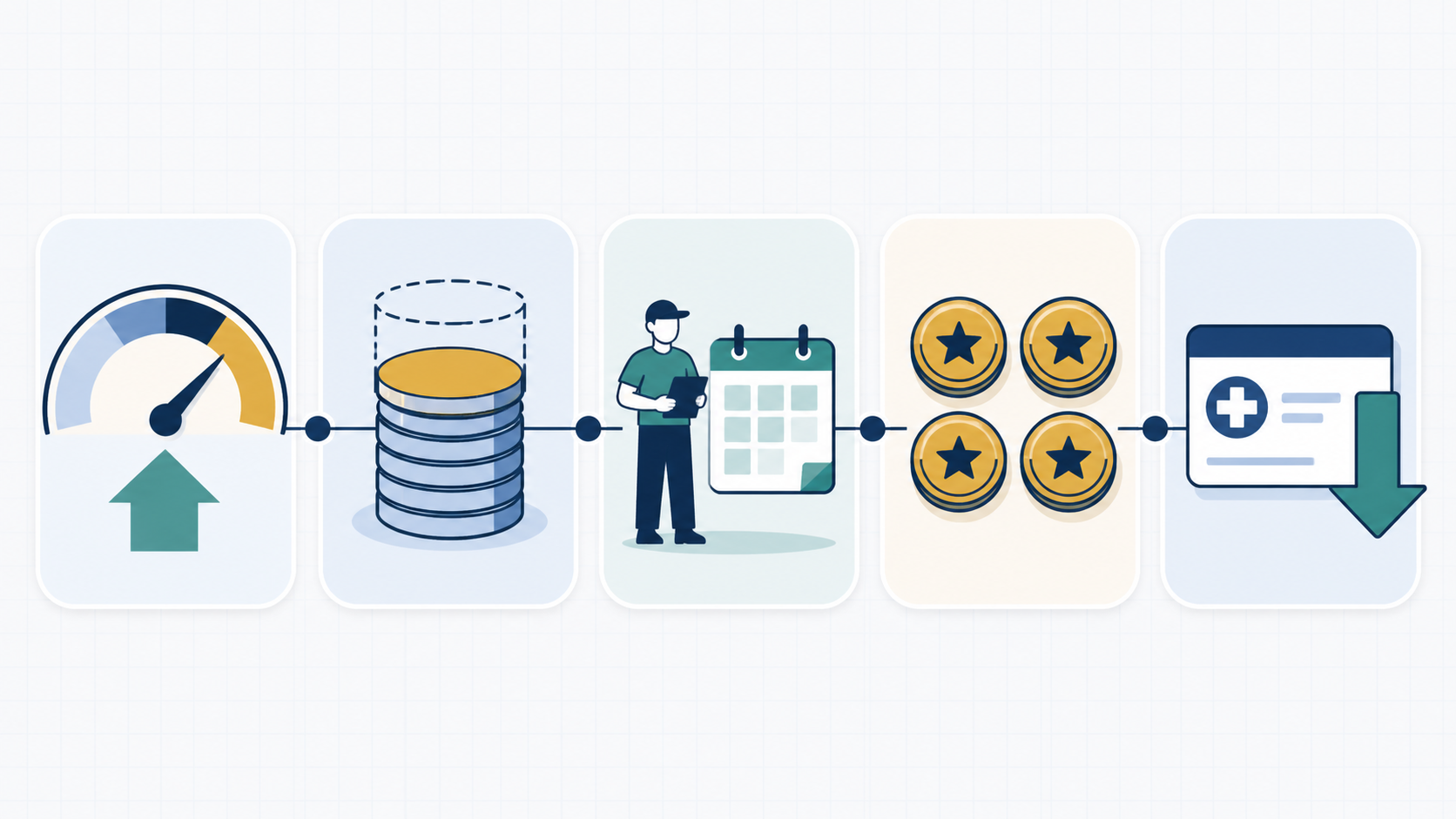
The 2.8% COLA raised Social Security and SSI benefits
SSA applied a 2.8% COLA for 2026 to Social Security retirement, disability, survivor and family benefits, as well as Supplemental Security Income. For Social Security beneficiaries, the increase began with benefits payable in January 2026. SSI recipients saw the higher rate first in the payment issued on December 31, 2025, because the normal January 1 payment date was a federal holiday. That early date did not create an extra SSI payment; it was the January 2026 benefit delivered on the prior business day.
The percentage adjusts a person’s benefit under Social Security’s calculation and rounding rules. It does not mean every beneficiary received the same dollar increase. SSA estimated that the average monthly retired-worker benefit would rise from $2,015 before the adjustment to $2,071 after it—about $56—but “average” is descriptive, not a guaranteed amount. Someone with a smaller gross benefit generally receives a smaller dollar increase, while someone with a larger gross benefit may receive a larger one. Our 2026 COLA and benefit amounts chart provides the detailed federal examples without turning them into personal estimates.
For SSI, the maximum monthly federal payment standard increased to $994 for an eligible individual and $1,491 for an eligible couple. Those are ceilings before SSA applies the program’s income and living-arrangement rules. Countable wages, other income, the income of certain family members, or receiving food and shelter support from someone else can reduce the federal amount. Some states add a supplement, so two otherwise similar recipients in different states may not have the same total.
It is also important to compare gross benefit with net deposit. A Medicare premium deducted from Social Security, voluntary federal tax withholding, recovery of an overpayment, or another authorized adjustment can absorb part of the gross increase. The personalized 2026 COLA notice shows the new gross benefit, deductions, and net amount. If your bank deposit does not match a generic 2.8% calculation, check that notice before assuming SSA made an error.
COLA protects benefits against measured inflation; it is not a one-time bonus, a separate stimulus payment, or evidence that everyone became eligible for a new benefit. Eligibility rules still apply, and a person who was not entitled to a Social Security or SSI payment does not become entitled solely because a COLA occurred.
More earnings are subject to Social Security tax in 2026
The Social Security taxable maximum—officially called the contribution and benefit base—increased from $176,100 in 2025 to $184,500 in 2026. Covered earnings up to the new limit can be subject to Old-Age, Survivors, and Disability Insurance (OASDI) tax. Earnings above the limit are not subject to OASDI tax for that year, although other taxes can still apply.
The OASDI rate itself did not rise. An employee pays 6.2% and the employer pays another 6.2% on covered wages up to the annual base. A worker with covered wages of at least $184,500 could therefore have up to $11,439 in employee Social Security tax withheld for 2026. Self-employed people generally face a 12.4% Social Security component through self-employment tax, with separate federal tax rules affecting how the calculation and deduction work.
For someone earning $100,000, this particular annual change does not expose additional wages to OASDI tax because the earnings are below both the 2025 and 2026 caps. For someone earning $190,000, however, the first $184,500 can be covered in 2026 rather than only the first $176,100. The increase therefore matters most to workers and employers above the prior cap.
Do not apply the $184,500 limit to Medicare tax. The regular Medicare Hospital Insurance tax generally continues across all covered wages because it has no annual wage-base maximum. High earners may also encounter Additional Medicare Tax under separate rules. The IRS Social Security and Medicare withholding guide explains the distinction.
Finally, “taxable maximum” does not mean maximum retirement benefit, and it does not determine whether Social Security benefits are included in federal taxable income. Those are separate calculations. The wage base controls how much current covered earnings can be subject to Social Security payroll tax and counted under the annual contribution base; it is not a shortcut for estimating a future monthly check.
The retirement earnings-test limits increased
People can work while receiving Social Security retirement benefits, but claiming before full retirement age can trigger the retirement earnings test. For a beneficiary who remains below full retirement age throughout 2026, the annual exempt amount increased to $24,480. SSA withholds $1 in benefits for every $2 of earnings above that amount.
For a person who reaches full retirement age during 2026, a different $65,160 limit applies. SSA counts only earnings received before the month full retirement age is reached and withholds $1 for every $3 above that higher limit. Beginning with the full-retirement-age month, earnings no longer reduce benefits under this test. The cutoff is therefore not simply based on how much someone earns during the entire calendar year.
Consider a simplified example. A beneficiary who is under full retirement age for all of 2026 earns $30,000 in countable wages. That is $5,520 above the $24,480 limit, so the formula indicates $2,760 in benefits may be withheld. SSA commonly administers a reduction by withholding whole monthly payments and then reconciling the amount; the exact payment pattern depends on the person’s monthly benefit and earnings information.
The test is narrower than many headlines imply. SSA generally counts wages from a job and net profit from self-employment, including items such as bonuses and commissions. It does not count pensions, annuities, investment income, interest, veterans benefits, or other government or military retirement benefits as earnings for this test. A special monthly rule may also help someone who retires in the middle of a year after already earning more than the annual limit.
Benefits withheld because of excess earnings are not handled like a permanent fine. When the beneficiary reaches full retirement age, SSA recalculates the monthly amount to give credit for months in which benefits were reduced or withheld. That does not mean SSA immediately returns the exact withheld dollars as a lump sum. It means the claiming-age reduction is adjusted prospectively under SSA’s rules.
This section concerns the retirement earnings test for retirement and survivor benefits. SSI uses separate countable-income rules, and SSDI has separate work incentives and disability-work thresholds. If expected 2026 earnings change, reporting the revised estimate to SSA can reduce the risk of an overpayment or unexpectedly withheld checks.
Work credits cost more, while full retirement age follows existing law
A worker earns Social Security credits through covered wages or net self-employment income. In 2026, one credit requires $1,890 in covered earnings, up from $1,810 in 2025. A person can earn no more than four credits in a year, regardless of how high the earnings are, so $7,560 in covered earnings is enough to earn all four 2026 credits. The credits can be earned across the year or in a shorter period; they are based on total annual covered earnings.
Credits answer an eligibility question, not an amount question. Having 40 credits generally establishes the work-history requirement for retirement benefits, but it does not guarantee a particular monthly payment. SSA calculates the retirement amount from a worker’s covered earnings history and claiming age. Disability and survivor coverage can require fewer credits for younger workers, so someone should check the requirement for the particular benefit rather than assuming every program requires 40.
The annual increase in the dollar value of a credit should also not be confused with a loss of credits already earned. Existing credits remain on the Social Security record even if the person changes jobs or has a year with no covered earnings. A secure my Social Security account can show the earnings record, credit status, and personalized retirement estimates.
Full retirement age did not suddenly rise for everyone because the calendar changed to 2026. It continues to follow the birth-year schedule enacted under existing law. The retirement FRA is 66 years and 10 months for people born in 1959 and 67 for people born in 1960 or later. As a result, some people born in 1959 reach FRA during 2026, while someone born in 1960 has an FRA of 67 rather than the age of 66 reached during 2026. SSA applies a prior-year convention to people born on January 1, which is another reason to use the official chart for an exact case.
Ordinary retirement benefits may still start as early as age 62, but starting before FRA permanently reduces the monthly amount under the claiming-age formula. Waiting beyond FRA can earn delayed retirement credits up to age 70. Those claiming choices are separate from the 2026 work-credit threshold and should not be treated as a new annual policy change.
Medicare Part B can change the net payment
The standard Medicare Part B premium increased from $185.00 per month in 2025 to $202.90 in 2026, a $17.90 increase. For many people who receive both Social Security and Medicare, the Part B premium is deducted from the monthly benefit. That is why the net bank deposit can rise by less than the gross Social Security COLA shown on the benefit notice.
The word standard is important. Higher-income enrollees can pay an Income-Related Monthly Adjustment Amount (IRMAA) in addition to the standard Part B premium, and a similar income-related adjustment may apply to Part D. For 2026, SSA generally uses tax-return information supplied by the IRS to make the determination. Enrollment penalties or other coverage circumstances can also produce a premium that differs from $202.90.
If the tax-return income SSA used no longer reflects the household’s circumstances because of a qualifying life-changing event, an enrollee may be able to request a new IRMAA decision. SSA identifies Form SSA-44 for this purpose. That is a formal account-specific process; this site cannot decide whether an event qualifies or collect the financial documents involved. The current brackets and review instructions are on SSA’s 2026 Medicare premiums page.
A federal “hold harmless” provision adds another layer. For many beneficiaries who have Part B premiums deducted from Social Security and meet the rule’s conditions, it limits the dollar increase in the premium so the Part B increase by itself does not reduce the net Social Security payment. The protection is not universal. It generally does not protect people paying IRMAA, and it may not apply to a new enrollee, someone who does not have the premium deducted from Social Security, or another excluded group.
The practical check is to read the personalized notice line by line: identify the new gross Social Security amount, the Part B premium, any Part D IRMAA, and other deductions, then compare the stated net amount with the deposit. Medicare Savings Programs may help some people with limited income and resources pay premiums or other Medicare costs, but only the responsible state agency can decide eligibility.
Payment dates did not switch to a new 2026 system
The amount rules changed for 2026, but the basic payment-day framework did not. For most people whose Social Security entitlement began after April 1997, the payment cycle still depends on the birth date of the worker whose record supports the benefit: birthdays from the 1st through 10th generally use the second Wednesday, the 11th through 20th use the third Wednesday, and the 21st through 31st use the fourth Wednesday.
Separate rules continue for several groups. People who were receiving or applied for Social Security on or before April 30, 1997 generally receive Social Security on the 3rd. People receiving both SSI and Social Security generally receive SSI on the 1st and Social Security on the 3rd. Other exceptions can also lead to the 3rd-of-the-month cycle, so a birthday alone does not resolve every case.
Weekend and federal-holiday adjustments can make a payment arrive before the usual date. SSI is normally due on the 1st; when the 1st is a weekend or federal holiday, SSA issues it on the prior eligible business day. The same prior-business-day principle applies when an applicable 3rd-of-the-month or scheduled Wednesday date is affected. An SSI deposit at the end of one month may therefore be the next month’s benefit, not an extra or “bonus” check.
Use the 2026 Social Security payment schedule for the complete birthday-group calendar and the 2026 SSI payment schedule for every SSI benefit month. The site’s payment-date calculator can help select the public schedule rule without asking for an SSN, bank account, claim number, or SSA credentials.
A bank or financial app may choose to make an incoming deposit available before the official payment date, but that is the institution’s policy—not a new SSA entitlement or a date SSA guarantees. Budget against the official schedule and verify institution-specific posting questions with that institution. If the official date has passed and the payment is still missing, follow the missing-payment checklist to confirm the date and contact the bank or SSA through official channels.
What did not become law—and how to verify your own numbers
Not every “Social Security change” in a headline is a current rule. Congressional bills, campaign proposals, and actuarial examples can describe raising or lowering taxes, changing benefit formulas, increasing retirement age, or using a different inflation index. Unless a proposal is enacted and implemented, it does not replace the rules on an SSA notice. A proposal appearing on an official government website can still be an analysis rather than law.
The 2026 Trustees Report is also a projection, not a notice that checks were cut in 2026. Under the Trustees’ intermediate assumptions, the combined OASI and DI reserves would be depleted in 2034 and ongoing income would cover about 83% of scheduled benefits at that point if the two legally separate funds were considered together. The separate retirement-and-survivor OASI fund is projected to deplete earlier, in the fourth quarter of 2032, with 78% payable at that time; the DI fund is projected to remain able to pay full benefits throughout the 75-year projection period. These figures describe a financing problem that requires legislative action, not an automatic reduction to current 2026 deposits.
Use this privacy-safe checklist to verify the parts of 2026 that apply to you:
- Benefit amount: read the personalized COLA notice for the gross benefit, deductions, and net amount.
- Earnings record and credits: review the record in a secure SSA account and report errors through SSA’s official process.
- Payment date: match the benefit type and birthday rule to the official calendar, then confirm account-specific timing with SSA.
- Medicare deduction: compare the Part B and any IRMAA amounts on the notice; use SSA or Medicare channels for a review.
- Deposit posting: ask the bank, credit union, or Direct Express about a pending or rejected federal deposit before sharing information elsewhere.
Only enter SSA credentials on SSA.gov. Do not post an SSN, claim number, Medicare number, bank account, Direct Express PIN, or login code on this site or in a public comment. This site cannot open an SSA record or trace a federal payment.
The bottom line is straightforward: the confirmed 2026 changes are the 2.8% COLA, updated wage and work thresholds, higher federal SSI maximums, and 2026 Medicare costs. Payment cycles and the birth-year FRA framework remain in place. For planning beyond this year, the site’s 2027 COLA calculator offers scenarios only; it does not announce or guarantee SSA’s official 2027 COLA.
Loading comments...