
Updated August 12, 2026. Living with family, a friend, or a roommate does not automatically reduce SSI. The payment can change when someone provides shelter free or below the amount SSA recognizes under its living-arrangement rules. In 2026, shelter support can reduce an individual's federal SSI by as much as $331.33 under the one-third reduction, or be valued under the separate presumed maximum value rule.
Since September 30, 2024, food provided in kind no longer counts as in-kind support and maintenance. Rent, mortgage payments, and qualifying utilities still can. This independent guide explains federal rules and examples; SSA must decide the household, support value, state supplement, and payment from the actual evidence.
Why a living arrangement changes an SSI payment
SSI pays a federal maximum of $994 for an eligible individual and $1,491 for an eligible couple in 2026 before countable income and living-arrangement adjustments. SSA asks where a person lives, whether the dwelling is the person's own household or another person's, who shares it, and who pays shelter costs. The agency uses those facts to decide whether in-kind support and maintenance—ISM—exists.
Common arrangements include owning or renting a home, paying rent to a relative, sharing an apartment, living rent-free in someone else's home, staying in a group-care setting, being homeless, or spending a full month in an institution. Two people at the same street address may be in different households under program rules. Conversely, separate bedrooms do not necessarily create separate households.
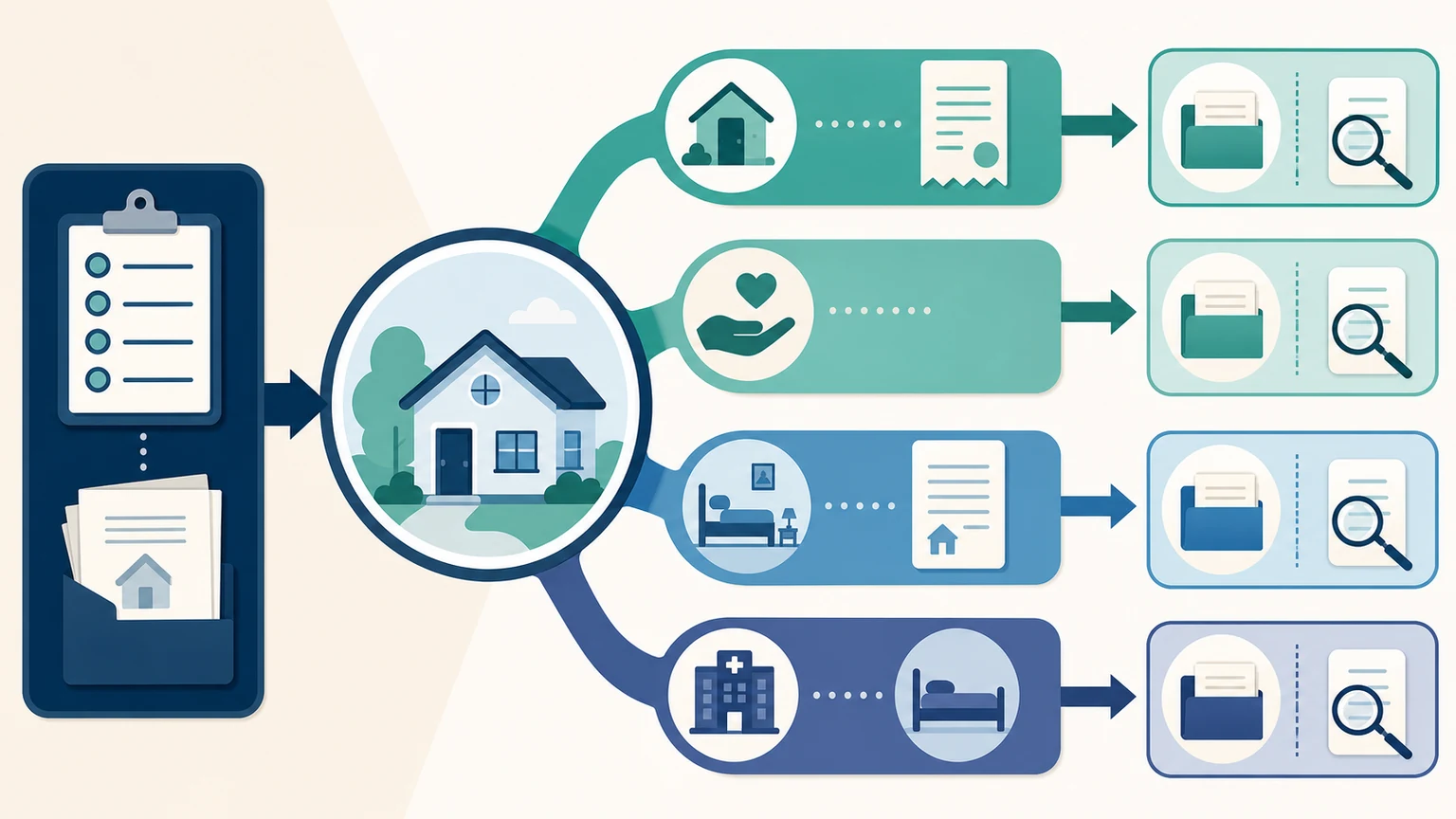
The order matters. SSA first determines the living arrangement and whether the value-of-the-one-third-reduction provision applies. If it does, SSA does not also apply the presumed maximum value rule in that month. If VTR does not apply but the person receives countable shelter help, PMV may cap the ISM value. Other income is then handled under normal SSI rules.
A reduced payment is not proof that living with relatives is prohibited. It reflects SSA's conclusion that someone else is meeting part of shelter needs. The conclusion can change when the recipient starts paying rent, begins paying a pro rata share, moves, or proves that the help is a bona fide loan. Report the change and supply records rather than assuming the adjustment will update automatically.
What counts as shelter after the 2024 food-rule change
Countable shelter generally includes rent or room charges, mortgage payments, real-property taxes, heating fuel, gas, electricity, water, sewer, and garbage collection. If a parent pays an adult recipient's $700 rent directly to the landlord, the payment can be shelter support. If a sibling pays a $100 electric bill, that also can be ISM. SSA values the help under VTR or PMV rules rather than always subtracting the bill dollar for dollar.
Telephone, internet, and cable television ordinarily are not shelter items. In SSA's 2026 example, an adult child pays a recipient's $100 electric bill, $50 phone bill, and $75 cable bill. Only the electric payment is evaluated as ISM; after an available $20 general exclusion, $80 reduces the illustrative federal payment.
Food changed on September 30, 2024. Groceries, prepared meals, or restaurant food another person provides in kind no longer reduce SSI as ISM. But cash is different: $200 handed to a recipient, or a broadly usable gift card, can be unearned income even if the giver says it is for groceries. SNAP is excluded under separate rules.
Bundled arrangements need documents. A flat $500 payment described as “rent and everything” may require SSA to identify the rental obligation and included shelter services. Keep the lease, household agreement, bills, proof of payment, and explanation of what each amount covers. Payments should match actual conduct; a paper lease that is never enforced may not establish a business arrangement.
Help with non-shelter expenses may avoid ISM but can have another classification. Someone paying a medical provider directly generally is different from giving the recipient cash. Report both situations accurately and allow SSA to apply the proper exclusion rather than changing labels.
How to calculate a fair share of household expenses
A pro rata share starts with the household's total shelter expenses, then divides that total by the number of household members. Suppose four people share a home with a $900 mortgage, $300 electricity, $200 water/sewer, and $200 gas bill. Total shelter expense is $1,600; one person's pro rata share is $400. If the SSI recipient actually contributes $400, SSA's published example finds no ISM reduction on those facts.
- List monthly rent or mortgage, property taxes if separate, heating fuel, gas, electricity, water, sewer, and garbage.
- Use a reasonable monthly average for fluctuating costs and retain the bills.
- Identify everyone who is a household member under SSA rules.
- Divide qualifying shelter costs by the member count.
- Compare the recipient's required and actual contribution, documenting payment.
Food is not included in this post-September-2024 shelter worksheet. Phone, cable, and many personal costs also stay outside it. That distinction makes an old worksheet that divides groceries and shelter together unreliable for current months.
Paying something is not always paying the full pro rata share. In the example, a $250 contribution leaves $150 of shelter provided by others. SSA then decides whether VTR or PMV applies; readers should not simply subtract $150 from SSI. Likewise, paying more than one's share in one month does not automatically create a credit against later months.
Household membership can be disputed. A college student, child with shared custody, live-in aide, boarder, or person temporarily absent may affect the denominator differently. Provide names, relationships, move dates, lease terms, and where each person normally lives. If SSA's count or expense total is wrong, ask for the calculation and submit corrected evidence within the notice's appeal period.
When the SSI one-third reduction rule applies
The value-of-the-one-third-reduction rule applies only to a defined arrangement: the recipient lives throughout a month in another person's household and receives the required support from people in that household. SSA's current materials continue to describe receipt of all meals and shelter, while also clarifying that food itself no longer creates ISM after September 30, 2024. Paying the pro rata shelter share or establishing one's own household can prevent VTR.
For an individual with no other countable income in 2026, VTR reduces the $994 federal benefit rate by one-third, or $331.33, leaving $662.67. The $20 general income exclusion is not applied to the VTR reduction. If VTR applies, SSA does not separately add more ISM under PMV in the same month.
Example: Maria moves into her adult son's home on January 1, contributes nothing to rent or utilities, and receives all shelter from his household for the full month. SSA may apply VTR, producing a $662.67 federal maximum before other income. If Maria begins paying her documented pro rata shelter share on February 1, she should report the change; SSA can evaluate a different living arrangement for February.
VTR does not automatically apply because someone lives in a house owned by family. A genuine rental arrangement, ownership or life-estate interest, separate household, full pro rata contribution, or other facts may change the classification. The rule also generally requires the arrangement throughout the month, so move-in and move-out timing matters.
Eligible-couple calculations use the couple FBR and household facts, and spouse deeming can interact with living arrangements. Do not double the individual result. Ask for SSA's living-arrangement code and worksheet if a notice is unclear.
How the 2026 presumed maximum value rule works
PMV generally values shelter help when VTR does not apply. For an individual in 2026, the presumed ceiling is one-third of the $994 federal benefit rate plus $20: $351.33. If the person has no other income and the $20 general exclusion is available, countable ISM is at most $331.33, leaving an illustrative $662.67 federal SSI payment.
PMV is a cap, not an automatic reduction in every case. If the actual shelter help is lower, the recipient can provide evidence to rebut the presumption. Suppose an adult child pays only a $100 electric bill for a recipient who otherwise pays all shelter. With the general exclusion available, SSA's example counts $80 and leaves $914 from the $994 federal rate. The reduction is not $331.33 merely because PMV exists.
Other income changes the arithmetic. If the recipient already uses the $20 general exclusion against a pension or Social Security benefit, it may not remain available for ISM. A person receiving several kinds of support should request the full countable-income computation rather than comparing only the final check with $994.
Evidence for rebuttal can include rent ledgers, canceled checks, utility statements, current market rental value, written household agreements, and statements from the provider. SSA compares the applicable actual/current market value under its rules. Unsupported estimates and retrospective agreements carry less weight.
PMV also interacts with the expanded rental-subsidy rule. Required rent at or above the lesser of PMV or current market rental value can establish a business arrangement under the federal rule, subject to documentation and special jurisdictional policy. Because rent and market value change, keep the lease and evidence current.
Renting from family, owning a home, roommates, and shelter loans
A rental agreement with a parent or child can be valid. It should identify the space, required monthly rent, due date, included utilities, late or arrears terms, and both parties' intent to enforce it. Payments should match the agreement. Under SSA's expanded rental-subsidy rule, rent is compared with the lesser of PMV or current market rental value; paying less can create countable subsidy. Texas has separate policy details.
Roommates who jointly rent can avoid ISM when each pays an enforceable share of rent and shelter utilities. A lease naming all tenants, split utility accounts, electronic payment trail, and household expense worksheet are useful. One roommate buying all groceries does not create ISM under the current food rule, but cash transferred to another roommate may be income depending on purpose and obligation.
Owning the home avoids VTR because the person is not living in another person's household on that basis, but outside shelter payments still can count. A relative paying the homeowner's mortgage or electric bill may provide ISM under PMV. Paying the recipient's phone, streaming subscription, or medical bill generally is not shelter ISM, though cash given to pay it can be unearned income.
Support can be a loan rather than a gift when a bona fide, enforceable repayment agreement exists when the shelter is provided. The agreement may be written or oral under policy, but written terms, repayment expectation, records, and state-law enforceability make proof stronger. Creating a “loan” only after SSA asks about free shelter does not establish the original obligation.
If benefits are delayed and family advances rent, document each advance, date, amount, creditor, repayment terms, and later repayments. A loan can avoid income treatment but unspent cash proceeds may become a resource. Significant family arrangements deserve review by SSA or a knowledgeable benefits adviser before signing.
Homelessness, shelters, hospitals, and nursing facilities
Experiencing homelessness does not by itself reduce SSI. SSA generally figures the payment as it would for someone living in their own house, apartment, or mobile home. A fixed address is not required for payment; SSA can arrange delivery. A person can receive up to the maximum amount payable in the state while living in a public shelter for people experiencing homelessness for up to six months in any nine-month period.
Medical institutions use different rules. If an adult is in a hospital or nursing home for the entire month and Medicaid pays more than half the cost of care, federal SSI is generally limited to $30, plus any state supplementary payment, and other income can reduce it. Facility classification, payer, entry/discharge dates, and whether the stay covers a full calendar month matter.
A person expected to be institutionalized for 90 days or less may qualify for continued regular SSI when needed to maintain a home or living arrangement and when required physician and recipient statements are obtained on time. This exception is not automatic. Tell SSA immediately about admission, expected discharge, ongoing shelter expense, and changes in the expected stay.
Group homes, board-and-care facilities, assisted living, foster settings, correctional institutions, and non-institutional care cannot all be treated alike. SSA examines who provides food and shelter, the payment source, licensing or facility status, and whether the resident maintains a separate household. State supplements may be substantial in some care arrangements.
Keep admission and discharge papers, Medicaid or insurance coverage notices, facility bills, lease/mortgage evidence, and medical estimates of discharge. Report a delayed discharge as well as an early one. A facility may know billing rules without knowing the recipient's full SSI record.
Reporting checklist and living-arrangement FAQs
Report moves, people entering or leaving the household, rent changes, new shelter help, marriage/separation, and institutional admission or discharge as soon as possible and no later than ten days after the end of the month. Provide the effective date—not merely the date you called. Keep confirmation and review the next notice.
Will SSI be reduced if I live with my parents?
Not automatically. An adult who pays a full pro rata shelter share or valid rent may avoid ISM. Free or subsidized shelter can trigger VTR or PMV. Parental deeming generally stops after age 18, but living-arrangement rules can still apply.
Does free food reduce SSI in 2026?
No, food provided in kind no longer counts as ISM. Cash or a gift card can still be unearned income, and free shelter still matters.
What proves I pay my fair share?
Use a lease or household agreement, complete shelter bills, member list, pro rata worksheet, bank transfers, canceled checks, and signed receipts. Cash without receipts is harder to establish.
Can SSA reduce more than one-third for shelter?
For an individual, 2026 PMV is $351.33, while the usual maximum payment reduction after an available $20 exclusion is $331.33. Other countable income can reduce the check further; VTR itself reduces the applicable FBR by one-third.
What if SSA used the wrong arrangement?
Request the living-arrangement and ISM calculation, compare its dates, members, expenses, contributions, and income, then submit corrections. Follow the reconsideration deadline printed on the notice; reporting a later change does not replace appealing an earlier error.
Our 2026 benefit amounts chart provides the federal rate context. This article is general educational information, not legal, financial, or benefits advice. SSA determines each payment, and state supplementation can change the final amount.
Loading comments...