
Updated August 12, 2026. The federal SSI maximum in 2026 is $994 for an eligible individual and $1,491 for an eligible couple, but a state may add a supplementary payment. That does not create one flat “SSI amount by state.” The supplement can depend on eligibility category, individual or couple status, living arrangement, geographic area, other income, and who administers the program.
This directory uses SSA's current 2026 classification for every state and the District of Columbia. It publishes a dollar amount only when an SSA or state-government primary source supports the stated category. Your federal or state notice remains the account-specific answer.
Federal SSI and a State Supplement Are Two Layers
Federal SSI provides the national base. In 2026, the maximum federal rate is $994 a month for one eligible person and $1,491 for an eligible couple. Countable earned or unearned income can reduce that amount. Living-arrangement rules can also lower the federal payment, while applicable income and resource exclusions can protect some items from counting.
A state supplementary payment—sometimes called SSP, OSS, or a state SSI supplement—is a state-funded layer. Each state decides whether to offer optional supplementation and which categories receive it. A recipient may therefore receive federal SSI only, federal SSI plus a state supplement, or in some federally administered programs a state-only supplement when the federal cash amount is zero but the relevant requirements remain satisfied.
The phrase “maximum SSI payment in California,” for example, is incomplete unless it identifies whether the person is aged, blind, or disabled; an individual or member of a couple; and living independently, in another person's household, or in a licensed care setting. State-administered programs can add their own categories and geographic distinctions.
Administration affects whom to contact and whether the state portion arrives with the federal payment or separately. It does not mean everyone in that jurisdiction receives the same extra amount. A rate table describes a defined category; the recipient's notice shows the actual calculation after income and other rules.
SSA's 2026 guide says the agency sends a letter explaining when payment starts and how much will be paid. Income, marital status, residence, or living-arrangement changes can alter the amount later. Read a current notice before treating any published ceiling as money available for a household budget.
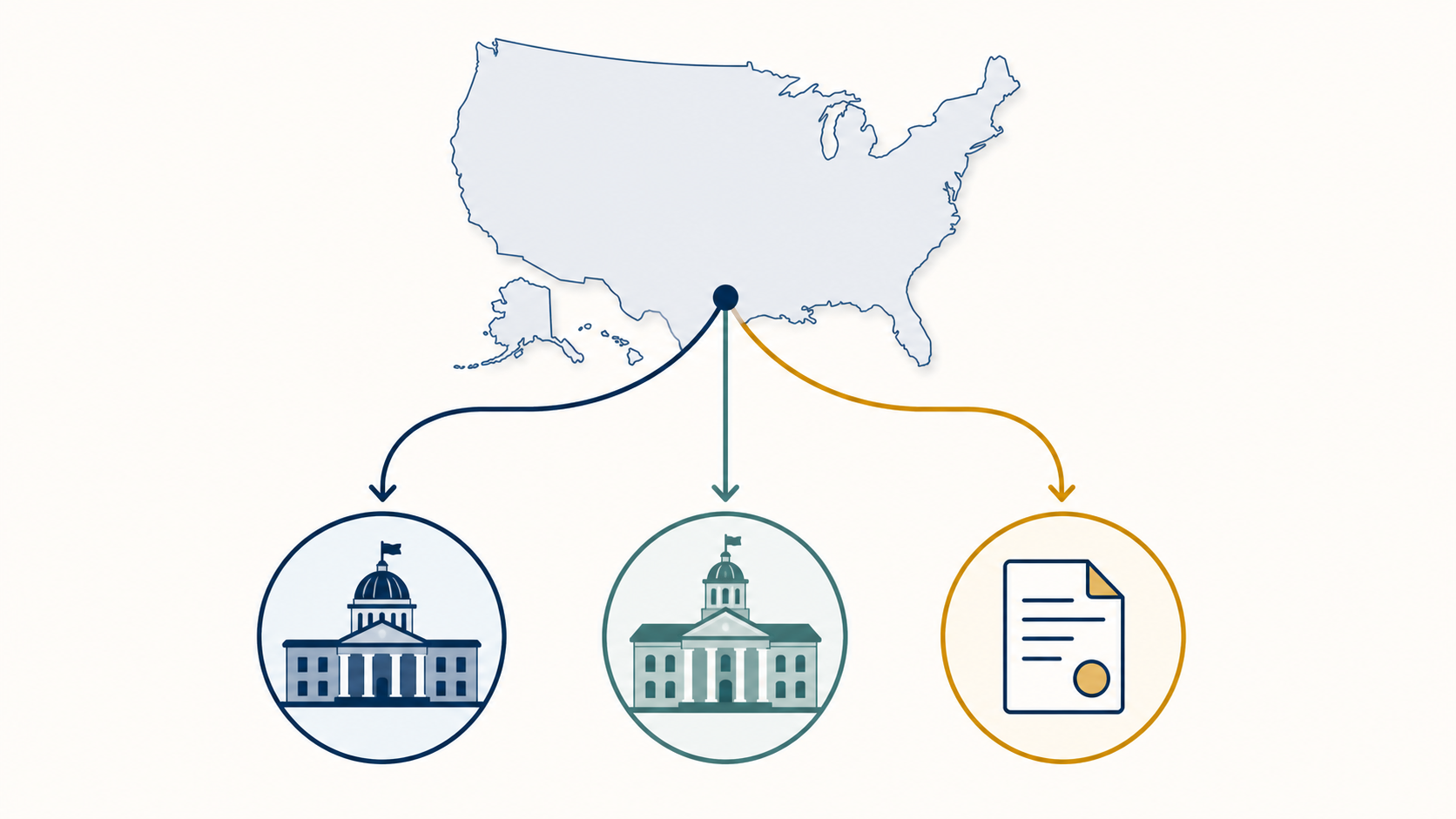
The Three State Supplement Administration Types
- No optional state supplement: SSA's current 2026 page identifies jurisdictions that do not add an SSI supplement. Residents may still receive federal SSI or other state programs, but a cash SSP should not be invented.
- SSA-administered supplement: SSA administers the state payment for all or specified categories. The federal and state portions are generally combined, and SSA is the contact for the total benefit.
- State-administered supplement: the state runs and pays its own supplement. Eligibility categories, application process, payment date, and rate schedule come from the state agency.
Six jurisdictions on SSA's list are marked as dual administration: Delaware, the District of Columbia, Iowa, Michigan, Pennsylvania, and Rhode Island. SSA administers some categories while the state administers others. Asking only whether a state is “federal” or “state” administered can therefore produce an incomplete answer.
Administration is not the same as generosity. A state can appear on the SSA-administered list even when an independently living disabled person receives no supplement for that category because the state pays only in certain care settings or to another category. A state-administered program can likewise be broad or narrowly targeted.
The practical question is: Who administers my specific living and eligibility category? Start with the directory below. Then use SSA's 2026 table or the state's current schedule. If the federal and state portions arrive separately, reconcile both notices before concluding that a payment is missing.
SSI State Supplement Directory for 2026
The directory identifies the administrator, not a guaranteed payment. “State schedule required” means a current state primary-source rate table must be checked for the recipient's category; no unverified number is supplied.
| State or area | 2026 administration | Amount verification route |
|---|---|---|
| Alabama | State administered | Current state program schedule required |
| Alaska | State administered | Current state program schedule required |
| Arizona | No optional supplement | None on SSA's 2026 list |
| Arkansas | No optional supplement | None on SSA's 2026 list |
| California | SSA administered | SSA 2026 table; state schedule also available |
| Colorado | State administered | Current state program schedule required |
| Connecticut | State administered | Current state program schedule required |
| Delaware | Dual: SSA and state | Check the category administrator |
| District of Columbia | Dual: SSA and district | Check the category administrator |
| Florida | State administered | Current state program schedule required |
| Georgia | State administered | Current state program schedule required |
| Hawaii | SSA administered | SSA 2026 table; category restrictions apply |
| Idaho | State administered | Current state program schedule required |
| Illinois | State administered | Current state program schedule required |
| Indiana | State administered | Current state program schedule required |
| Iowa | Dual: SSA and state | Check the category administrator |
| Kansas | State administered | Current state program schedule required |
| Kentucky | State administered | Current state program schedule required |
| Louisiana | State administered | Current state program schedule required |
| Maine | State administered | Current state program schedule required |
| Maryland | State administered | Current state program schedule required |
| Massachusetts | State administered | Current state SSP schedule required |
| Michigan | Dual: SSA and state | Check the category administrator |
| Minnesota | State administered | Current state program schedule required |
| Mississippi | No optional supplement | None on SSA's 2026 list |
| Missouri | State administered | Current state program schedule required |
| Montana | SSA administered | SSA 2026 table; category restrictions apply |
| Nebraska | State administered | Current state program schedule required |
| Nevada | SSA administered | SSA 2026 table |
| New Hampshire | State administered | Current state program schedule required |
| New Jersey | SSA administered | SSA 2026 table |
| New Mexico | State administered | Current state program schedule required |
| New York | State administered | Current New York schedule required |
| North Carolina | State administered | Current state program schedule required |
| North Dakota | No optional supplement | None on SSA's 2026 list |
| Ohio | State administered | Current state program schedule required |
| Oklahoma | State administered | Current state program schedule required |
| Oregon | State administered | Current state program schedule required |
| Pennsylvania | Dual: SSA and state | Check the category administrator |
| Rhode Island | Dual: SSA and state | Check the category administrator |
| South Carolina | State administered | Current state program schedule required |
| South Dakota | State administered | Current state program schedule required |
| Tennessee | No optional supplement | None on SSA's 2026 list |
| Texas | State administered | Current state program schedule required |
| Utah | State administered | Current state program schedule required |
| Vermont | SSA administered | SSA 2026 table |
| Virginia | State administered | Current state program schedule required |
| Washington | State administered | Current state program schedule required |
| West Virginia | No optional supplement | None on SSA's 2026 list |
| Wisconsin | State administered | Wisconsin's current state schedule required |
| Wyoming | State administered | Current state program schedule required |
| Northern Mariana Islands | No optional supplement | None on SSA's 2026 list |
This classification is broader than child-specific supplementation. A state may supplement adults but not children, or only children in a narrow care setting. For a child claim, use SSA's 2026 child SSI guide and confirm the child's category separately.
Verified 2026 Maximums for SSA-Administered Independent-Living Categories
SSA's 2026 guide publishes the following maximum combined federal-and-state levels for an individual or couple living independently. Each cell shows individual / eligible couple. These are category ceilings before countable income, not average payments or universal awards.
| Jurisdiction | Older person | Blind | Has a disability |
|---|---|---|---|
| California | $1,233.94 / $2,098.83 | $1,318.32 / $2,324.35 | $1,233.94 / $2,098.83 |
| Delaware | $994 / $1,491 | $994 / $1,491 | $994 / $1,491 |
| District of Columbia | $994 / $1,491 | $994 / $1,491 | $994 / $1,491 |
| Hawaii | $994 / $1,491 | $994 / $1,491 | $994 / $1,491 |
| Iowa | $994 / $1,491 | $1,016 / $1,535 | $994 / $1,491 |
| Michigan | $994 / $1,491 | $994 / $1,491 | $994 / $1,491 |
| Montana | $994 / $1,491 | $994 / $1,491 | $994 / $1,491 |
| Nevada | $1,030.40 / $1,565.46 | $1,103.30 / $1,865.60 | $1,030.40 / $1,491 |
| New Jersey | $1,025.25 / $1,516.35 | $1,025.25 / $1,516.35 | $1,025.25 / $1,516.35 |
| Pennsylvania | $994 / $1,491 | $994 / $1,491 | $994 / $1,491 |
| Rhode Island | $994 / $1,491 | $994 / $1,491 | $994 / $1,491 |
| Vermont | $1,049.68 / $1,596.80 | $1,049.68 / $1,596.80 | $1,049.68 / $1,596.80 |
A cell equal to $994/$1,491 shows the federal maximum for that independent-living category. It does not prove that the state never supplements anyone. Several programs pay only in particular settings or through a separately state-administered category. California's official schedule, for example, contains additional living arrangements and nonmedical out-of-home care levels.
Use the row only after matching the person's eligibility category and living arrangement. If a notice shows less, countable income or another rule may explain the difference. If it shows more, a different state category may apply. Do not add the listed total to the federal payment—it already represents a combined maximum.
Why the State Supplement Amount Can Change
State schedules often resemble a grid because the same person can move between payment categories without moving to another state. The most common variables are:
- Eligibility category: aged, blind, or disabled recipients can have different state levels.
- Individual or couple status: an eligible couple uses a different rate from one eligible person.
- Living arrangement: independent living, another person's household, family care, assisted living, residential care, and medical facilities may have separate levels.
- Geography: some state programs distinguish specified counties or metropolitan areas.
- Countable income: a maximum table assumes income conditions that may not match the recipient.
- Program category: optional and mandatory supplements, grandfathered cases, and special-needs supplements can follow different rules.
Federal living-arrangement rules also matter. Under applicable 2026 in-kind support rules, receiving shelter help can reduce federal SSI by as much as $351.33. People in certain Medicaid facilities may face a $30 federal payment limit, while some states add a supplement to that category. A state table must therefore be read with the federal code.
Timing can create apparent differences. A state-administered supplement may arrive separately from federal SSI, and a state can change its rate during the year. Wisconsin, for example, issued an official memo increasing specified state supplement rates by 10% effective May 1, 2026. A January chart is stale for those later benefit months.
Whenever a living arrangement changes, report it to the appropriate administrator and preserve proof. A move from independent housing to a care facility can affect the federal portion, state category, payment issuer, and possibly Medicaid arrangements. The 2026 SSI payment calendar explains federal timing, not every state's separate issuance date.
How to Verify a State-Administered 2026 Amount
Start with the state agency's current rate schedule and match every column. These verified examples show why a search-result snippet is insufficient:
- California: the official January 1, 2026 schedule shows an independently living aged or disabled individual with a $239.94 state portion and $1,233.94 combined maximum. A blind individual in that broad living category has a different total.
- New York: the official OPWDD chart is limited to people served in specified certified residences. Its Level I family-care total is $1,260.48 in New York City and named downstate counties, and $1,222.48 in the rest of the state. Those are not general independent-living rates.
- Massachusetts: the official 2026 schedule lists an independently living disabled person's state portion as $114.39 and combined total as $1,108.39. Separate rows apply to aged, blind, shared-expense, rest-home, medical-facility, and assisted-living categories.
- Wisconsin: an official memo raised the standard state supplement effective May 1, 2026 to $92.16 for an eligible individual and $145.26 for an eligible couple. It separately lists a one-spouse-eligible couple and an exceptional-expense supplement.
Use the example pattern, not the example number: identify the administrator, effective date, eligibility category, living arrangement, individual/couple status, and whether the table shows the state portion or combined total. Then compare that defined row with the recipient's federal and state notices.
If no current state-government table is available, do not rely on an old advocacy chart or automatically increase a prior rate by the federal COLA. States control their own supplement changes. Contact the administering state program or SSA and request the current level for the exact category rather than guessing.
Average State Supplement Is Not the 2026 Payment Rate
SSA's June 2026 statistics report the average monthly federally administered state supplementary payment. The all-area average was $211.90, with these jurisdiction totals:
| Jurisdiction | Average supplement, June 2026 |
|---|---|
| California | $241.51 |
| Delaware | $136.03 |
| District of Columbia | $467.97 |
| Hawaii | $618.77 |
| Iowa | $253.29 |
| Michigan | $113.08 |
| Montana | $84.30 |
| Nevada | $41.74 |
| New Jersey | $36.38 |
| Pennsylvania | $542.18 |
| Rhode Island | $294.07 |
| Vermont | $57.74 |
These statistics describe payments actually made across recipients and categories. They exclude retroactive payments and cover only states with federally administered optional supplementation. They do not measure state-administered payments nationwide.
An average can be higher than an independent-living supplement because a state has higher-paying care categories. It can also be lower because many recipients qualify for a small category or have income that reduces payment. Pennsylvania's June average, for example, should not be inserted into an individual's budget as a promised supplement.
Use a rate table to identify the maximum for a defined category. Use an average table to understand a population. Use the notice to know one person's actual payment. Mixing those three answers is a common source of misleading “SSI by state” claims.
Checklist to Confirm Your 2026 State Supplement
- Start with the directory. Identify no supplement, SSA administration, state administration, or dual administration.
- Name the eligibility category. Record aged, blind, or disabled status and whether the payment is for an individual or eligible couple.
- Match the living arrangement. Do not use an independent-living row for a licensed facility or another person's household.
- Check the effective date. Look for midyear state changes and confirm the benefit month.
- Identify what the number represents. State portion, federal portion, combined maximum, average, personal allowance, and provider payment are different measures.
- Account for income. A maximum rate does not subtract the recipient's countable earned or unearned income.
- Confirm the issuer. In a dual or state-administered category, the state payment may require separate contact or arrive separately.
- Read both notices. The current SSA/state notice provides the account-specific amount and review or appeal instructions.
For an SSA-administered category, contact SSA about the total benefit. For a state-administered category, use the agency shown on the recipient's notice or the official state program page. The site's SSA contact guide can route federal questions, but it cannot resolve a state-only payment record.
This independent guide is not affiliated with SSA or any state agency. It cannot access a benefit record, determine a living-arrangement code, or promise a state supplement. Never send this site an SSN, bank number, medical record, or login credential.
Official sources
Loading comments...