
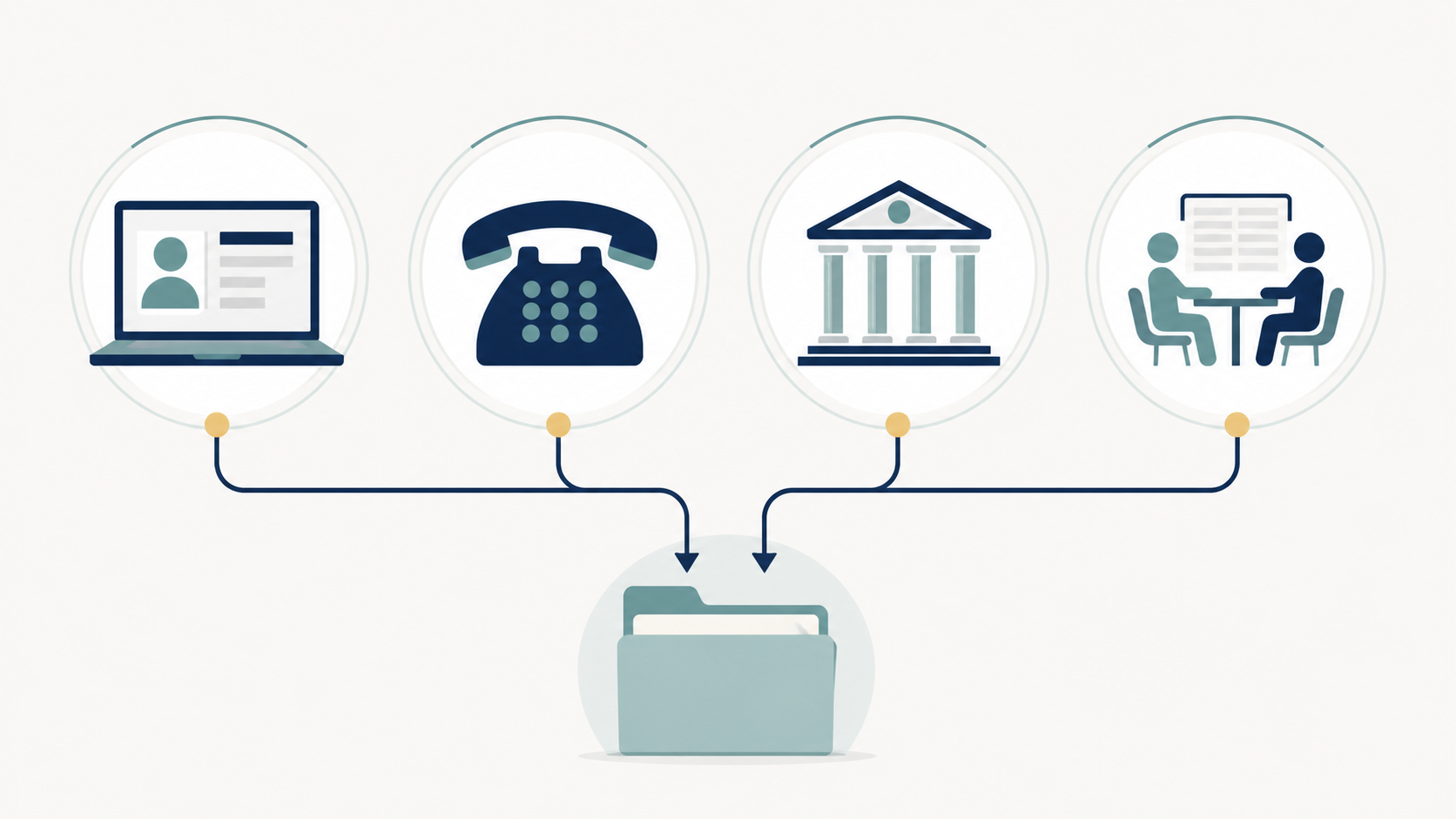
Updated August 12, 2026. To change SSI direct deposit, start at SSA's official direct-deposit page. Sign in and follow the benefit-specific instructions; if the SSI change cannot be completed online, use SSA's phone route, a participating bank's Automated Enrollment process, or a local Social Security office.
Do not close the old account as soon as you submit the request. SSA's current 2026 SSI publication says a change may take about 30 to 60 days and advises waiting until an SSI payment has reached the new account. The effective date is account-specific, so confirm the update through SSA and the receiving bank.
The Safest SSI Direct Deposit Change Route
- Open SSA.gov yourself. Use the official Update direct deposit page rather than a search ad or link from an unsolicited message.
- Try the signed-in workflow. SSA will determine whether the benefit type and account can complete the update online.
- Follow the next step shown. If SSI cannot be changed online, use the official phone, participating-bank ENR, or office route described below.
- Keep the old account open. Wait until the new bank has actually received an SSI payment.
- Verify the result. Check SSA's record and both financial institutions around the scheduled payment date.
The old and new accounts should belong to the correct beneficiary or representative-payee arrangement. Do not route a payment into another person's account merely for convenience without confirming that the titling and payee rules are acceptable. A bank can confirm its account title, but SSA controls the benefit record.
A direct deposit change does not change the public SSI payment schedule or create an early payment. The 2026 SSI calendar shows the scheduled federal dates. A bank may display a pending transaction differently, but only the receiving institution can explain its ledger.
Can You Change SSI Direct Deposit Online?
SSA's current direct-deposit task page begins with a personal-account sign-in and calls online updating the fastest method. It also says that, depending on benefit type, a person may need to call and that the signed-in service will show the next steps if the update cannot be completed online.
SSI-specific official materials are more cautious. SSA's address/direct-deposit FAQ says the online change service is not currently available to SSI recipients, although they can use the profile to check address and payment method. SSA's 2026 SSI publication says direct deposit can be changed by phone when the recipient has a personal account but cannot make the change online.
Because account features and identity requirements evolve, the responsible answer is not a blanket yes or no. Go directly to the current SSA task page, sign in through the official identity provider, and follow the result shown for the benefit record. If it routes an SSI recipient to a call or appointment, do not try to force a Social Security-benefits-only workflow.
Viewing a payment method is not the same as successfully submitting a change. Save the official confirmation or note the date and method used. Later, verify that the SSA record reflects the intended financial institution without sharing the full account number outside the official channel.
No one from this site needs an SSA username, password, one-time code, SSN, routing number, or account number. A caller who asks for a login code or payment to “unlock” the online change is not following the legitimate workflow.
How to Change SSI Direct Deposit by Phone
SSA's SSI-specific reporting page directs recipients to 1-800-772-1213; the TTY number is 1-800-325-0778. The current page lists service in most U.S. time zones Monday through Friday from 8 a.m. to 7 p.m. Hours and menu wording can change, so confirm the number on SSA.gov before calling.
Tell the representative that the task is an SSI direct deposit update. Have the current direct deposit routing number and account number available, as SSA's SSI page instructs. Also have the new bank's routing number, new account number, account type, and exact account title. Read the numbers from an official bank source and repeat them carefully.
SSA may require identity proofing or a personal my Social Security account for a telephone change. If the representative cannot complete the request by phone, follow the official instruction for an office appointment or another approved route. Do not call repeated unofficial numbers hoping to bypass a security requirement.
Before ending the call, ask what was submitted, whether any additional action is required, and how to verify the effective account. Do not demand a guaranteed deposit month that the representative has not confirmed. Record the call date and general instruction without keeping a password, PIN, full SSN, or complete bank details in an unsecured note.
If a caller contacts you first and claims that SSA must “verify” a bank change, end the call and dial the number from SSA.gov yourself. A legitimate benefit update does not require a gift card, cryptocurrency, wire transfer, or fee.
Ask Your Bank About SSA Automated Enrollment
SSA's current task page says a financial institution can send updated direct deposit information directly to Social Security through Automated Enrollment, commonly abbreviated ENR. This can avoid a phone call or office visit. Not every bank or credit union offers the process.
Ask a branch or the institution's official customer-service channel: “Do you support Social Security Automated Enrollment for an SSI direct deposit change?” Do not assume that a generic employer-payroll form or ordinary ACH setup sends the required record to SSA. The institution should confirm that it is transmitting the federal benefit enrollment.
Verify the routing number, account number, checking/savings designation, and account title before authorizing the request. Keep the bank's confirmation and date. The bank can explain what it transmitted, but it cannot change SSI eligibility, benefit amount, representative payee, or SSA's payment schedule.
If the bank does not offer ENR, return to the SSA phone or local-office route. Opening an account does not automatically enroll SSI. Likewise, moving money from the old bank to the new bank is not the same as changing the destination on SSA's record.
Use the new institution's official app, website, published number, or branch. A person who approaches through social media and offers to “link” an SSI payment is not a safe substitute for ENR. Never share an SSA login or one-time authentication code with bank staff or an outside helper.
When to Use a Local Social Security Office
A local office is the appropriate fallback when the online service or phone representative says in-person identity proofing is required, the recipient cannot use the personal account, or the record has a complication that cannot be resolved remotely. Use SSA's official office locator rather than an address from a directory listing.
SSA's direct-deposit task page offers a signed-in appointment path and says callers can request help with the update. Confirm whether an appointment is required before traveling. Office hours, walk-in practices, and document needs can vary, and a local office may give instructions specific to the case.
Bring the documents SSA tells you to bring, along with official bank evidence showing the routing number, account number, account type, and title. A voided check can help for checking accounts, but starter checks and deposit slips sometimes display routing information differently. Ask the bank for a direct-deposit letter if necessary.
A representative payee should identify the payee arrangement and confirm how the account must be titled. Do not simply substitute a beneficiary's personal account when SSA's record requires a representative-payee account. Organizational payees and foreign-address cases may follow additional procedures.
Protect original identity documents and bank information while traveling. Hand them only to an SSA employee through the official office process. No legitimate person waiting outside an office should charge to reserve an appointment, carry documents inside, or speed up the change.
Check the Bank Information Before You Submit
A single transposed digit can send a request into correction or return processing. Confirm these fields from the bank's official record:
- the financial institution's routing number for incoming ACH direct deposits;
- the complete new account number;
- whether the account is checking or savings;
- the account title and beneficiary or representative-payee ownership;
- the current account information SSA may use to identify the existing arrangement;
- the date and method by which the change request is submitted.
Do not copy numbers from the front of a debit card; a card number is not a bank account number. Do not rely on a handwritten number from an unknown helper. If an online-only account uses a partner bank, ask the provider for the exact ACH routing and account details for federal benefit deposits.
Keep the information private. SSA, the official financial institution, and an authorized representative may need it for the change. A blog, forum, social-media group, or “payment tracker” does not. Redact account numbers from any screenshot used to ask a general question.
Never approve a change after receiving an unexpected call or text. Navigate to SSA.gov yourself or use the number printed on an official SSA source. Government agencies do not require gift cards, cryptocurrency, cash, or a wire transfer to protect a benefit.
After submission, monitor both accounts without publicly sharing pending screenshots. If an unauthorized bank change appears, contact SSA and the financial institution immediately through official channels and follow their fraud instructions.
How Long an SSI Direct Deposit Change Can Take
SSA's 2026 publication for SSI recipients says changing direct deposit information could take about 30 to 60 days. Treat that as planning guidance, not a guaranteed processing window. Submission method, identity verification, cutoffs, record issues, and the point in the monthly payment cycle can affect the result.
Keep the old account open until an SSI payment has actually arrived in the new account. A confirmation that the request was submitted is not proof that the next payment will use the new destination. If the old bank requires an account closure, contact SSA and both banks before the scheduled payment and ask what each can verify.
If the payment goes to the old account and remains accessible, do not assume the change failed permanently; confirm the effective record with SSA. If the old account is closed, ask the old institution whether it rejected or returned the deposit, then contact SSA. There is no universal return or reissue date.
If the scheduled date has arrived and neither account shows the payment, SSA's missing-payment guidance says to contact the financial institution first. Then contact SSA if it remains missing. Use the site's missing payment checklist or the detailed payment tracking guide without sharing account numbers.
Separate the bank-change issue from the benefit amount. A new account should not alter SSI eligibility or the scheduled amount by itself, but the account balance is a resource that may need to be reported under SSI rules. Follow SSA's reporting instructions for account and resource changes.
Is There an SSI Direct Deposit Change Form?
SSA's current domestic instructions do not direct ordinary SSI recipients to one universal printable “direct deposit change form.” The official workflow uses the signed-in task, SSA phone service, a participating financial institution's Automated Enrollment process, or a local office.
Search results often surface forms that look official but serve another purpose. The FastStart direct deposit authorization is designed for federal employee net salary and agency-approved payments; it is not a general SSI bank-change form. Forms in the SSA-1199 series are used for international direct deposit in specified countries and banking systems. Choosing a form only because its title contains “direct deposit” can delay or misroute the request.
If SSA or a Federal Benefits Unit gives a recipient a specific form, use that exact current form and its instructions. Check the URL, form number, revision, country or program scope, signature requirements, and destination. Do not mail routing and account numbers to an address copied from a third-party template.
A bank may have its own internal authorization for Automated Enrollment. Completing that bank form is part of the institution's verified process; it does not mean the same document should be mailed independently to SSA. Ask the institution how it transmits and confirms ENR.
For a domestic SSI change, the safest form answer is therefore: start with SSA's current task page and use only paperwork specifically requested by SSA or the participating bank for this record. Do not download a decades-old PDF as a shortcut.
Common SSI Direct Deposit Change Problems
| Situation | First action | Do not assume |
|---|---|---|
| New account is not shown | Check submission confirmation, then contact the route used or SSA | The next payment will automatically use it |
| Payment went to old open account | Keep funds secure and confirm the effective change with SSA | The request was permanently rejected |
| Old account was closed | Ask the old bank whether the deposit was returned, then contact SSA | Reissue will happen on a fixed date |
| Neither account shows payment | Confirm the scheduled date and contact the financial institution first | A public tracker can locate the transfer |
| Account changed without permission | Contact SSA and the financial institution through official channels immediately | An unsolicited caller can secure the record |
| Representative payee changed | Ask SSA how the payee record and account title must be updated | A normal beneficiary account is interchangeable |
| Switching to Direct Express | Use SSA/Treasury's official enrollment route | A bank direct-deposit form enrolls the card |
Take screenshots or notes only after masking sensitive data. When contacting a bank or SSA, state the benefit type, scheduled date, old/new institution, submission date, and what each account shows. Do not publish the full transaction reference or account number.
A direct deposit problem is different from a suspended benefit or changed SSI amount. If SSA's notice says the payment was withheld or reduced, address the reason and appeal rights in the notice. A bank cannot reverse an eligibility determination.
Final SSI Bank Change Checklist
- Use SSA.gov, the official SSA phone number, a local office, or a participating bank's ENR process.
- Confirm the new ACH routing number, account number, account type, and title from the bank.
- Follow the signed-in service's benefit-specific instructions; do not assume SSI online access.
- Save the submission date and official confirmation without storing passwords or full identifiers in an unsecured note.
- Keep the old account open until the first SSI payment reaches the new account.
- Check the public scheduled date separately from the bank-change effective date.
- If a payment is absent, contact the financial institution first and SSA next.
- Report an unauthorized change immediately through official SSA and bank channels.
The current general SSA number is 1-800-772-1213 and TTY is 1-800-325-0778. Verify both on SSA.gov before calling because published contact details and hours can change. The site's SSA phone guide provides current navigation context, but this independent site cannot place or monitor the request.
This guide is not affiliated with SSA, Treasury, Direct Express, or any bank. It cannot change direct deposit, access an account, trace a payment, or guarantee timing. Never send this site an SSN, routing or account number, card number, PIN, login, or one-time code.
Official sources
Loading comments...