
Updated August 12, 2026. You can start an Supplemental Security Income application online in some situations, but not every applicant uses the same route. Adults applying on the basis of age 65 or older, parents applying for a child, and people who do not meet SSA’s current simplified-online conditions may need a phone or in-person appointment.
Before applying, identify the correct SSI route
SSI is a needs-based federal program. It may pay qualifying people who are age 65 or older, blind, or disabled, including children with qualifying disabilities, when financial and other program rules are met. Social Security Disability Insurance (SSDI), by contrast, is based on insured status from covered work. Some adults should be screened for both.
Choose the applicant type before gathering forms:
- Adult age 65 or older: SSI can be based on age without proving disability, but income, resources, residence, citizenship or qualifying noncitizen status, and living arrangements still matter.
- Adult ages 18–64: an SSI disability claim includes both a medical disability determination and a nonmedical financial review.
- Child under 18: the child disability standard applies, and SSA may consider part of a parent’s income and resources under deeming rules.
- Blind applicant: special program provisions may apply, but SSA still determines the individual claim.
- Possible SSI and SSDI applicant: SSA can evaluate concurrent claims when work history may support SSDI and finances may support SSI.
This guide focuses on SSI’s route choices and financial documentation. If you are an adult filing a disability claim, the site’s online disability application and medical checklist provides more detail about the disability report. It should be used alongside—not instead of—the SSI income, resource, and household preparation below.
No independent site can preapprove an applicant. Use SSA’s official benefit screener and application page, and do not enter an SSN, bank account, medical record, or SSA password on this website.
Can you apply for SSI online in 2026?
Start at SSA’s official Apply for Benefits page. It asks who is applying and whether the claim involves disability or age-65+ SSI, then directs the user to the available route. Do not assume that an old article or search-result link reflects the current online process.
Who may use the simplified online SSI application
SSA’s June 2025 explanation says its simplified online SSI application is available to a defined group who:
- are age 18 through 64 years and 10 months;
- are applying for both SSI and SSDI;
- have a personal my Social Security account;
- have never been married;
- have not previously applied for SSI for themselves or a child; and
- are U.S. citizens, while SSA notes that some noncitizens may qualify under SSI rules.
Use SSA’s current prompts to determine whether that path is offered. The list and interface can change, and the online submission may still be followed by contact for additional financial or medical information.
If the full online path is not offered
Not seeing a complete online application is not a denial of SSI. An adult applying only on the basis of age 65+, a parent applying for a child, someone with a prior SSI application, or another applicant outside the simplified conditions can contact SSA for an appointment. SSA may conduct the interview by phone or in person.
If account access is the problem, use the site’s my Social Security login guide, but create or recover credentials only on SSA.gov, Login.gov, or ID.me as directed by SSA. Never share a verification code with a caller.
Apply for SSI by phone or at a Social Security office
If you cannot use or finish the online route, SSA says you may apply by phone or in person. Call the official SSA number—currently 1-800-772-1213 (TTY 1-800-325-0778), generally Monday through Friday from 8:00 a.m. to 7:00 p.m.—or contact a local office through SSA.gov. Confirm current hours before calling.
Tell the representative exactly who is applying and why: “I want to apply for SSI for myself based on age 65,” “I want to apply for SSI disability,” or “I want to apply for SSI for my child.” Also ask whether SSA should screen for any Social Security benefit based on the applicant’s or a family member’s work record.
Protect the filing date
SSI generally cannot pay for months before the application/protective-filing framework allows. Do not wait to make initial contact merely because every bank statement, medical record, or identification document is not in hand. SSA says it may help obtain evidence and will tell the applicant what is required.
When requesting an appointment:
- Record the date and method of contact.
- Save an appointment letter, confirmation number, or online confirmation.
- Ask what deadline is required to complete the application and preserve the filing date.
- Attend or promptly reschedule the interview.
- Keep proof of any documents submitted.
A protective filing is not a completed award and does not waive eligibility rules. The applicant must complete the required application steps within SSA’s instructions. For office planning, use the Social Security office locator and appointment guide. Do not mail original documents unless SSA specifically instructs you how and where to send them.
SSI application documents checklist
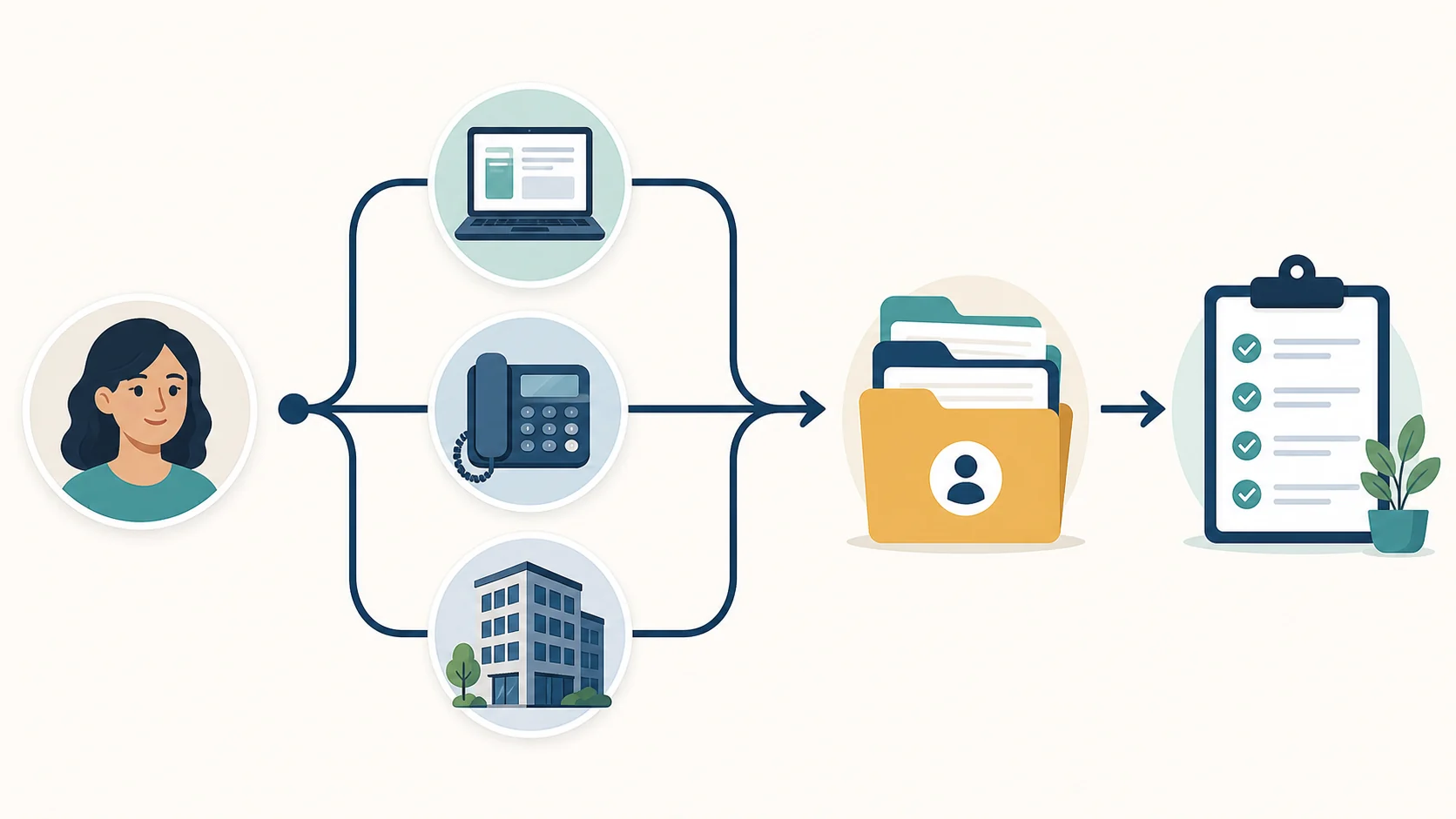
Identity, age, residence, and status
- Social Security number or card information, if available.
- Birth record or other proof of age when SSA has not already verified it.
- Citizenship or qualifying noncitizen documentation when required.
- Proof of current living address and household members.
- Marriage, separation, divorce, or household relationship information relevant to the claim.
Income, resources, and living arrangements
- Recent pay stubs and self-employment/tax records.
- Award letters or statements for pensions, unemployment, workers’ compensation, support, or other unearned income.
- Bank statements for checking and savings accounts.
- Records for property other than the home, vehicles, life insurance, burial funds, stocks, bonds, or other resources SSA asks about.
- Lease, rent receipts, mortgage or property-tax records, and utility bills that help explain who pays household shelter costs.
- Information about help received from relatives or others, including loans or contributions, when relevant.
Disability evidence for an adult or child
Prepare provider names, addresses, phone numbers, treatment dates, medications, tests, and records you already possess. Adults should list work history and explain how the condition limits work-related activity. For a child, include schools, teachers, special education records, testing, therapy, and descriptions of functioning at home and in other settings. SSA’s Adult and Child Disability Starter Kits help organize this information.
This is a preparation list, not a demand to obtain every item before filing. SSA states that one document may substitute for another and may help when evidence is difficult to obtain. Submit sensitive documents only through a method SSA directs.
Step-by-step SSI application workflow
- Start with SSA’s guided application page. Select adult or child and the relevant SSI basis.
- Use the offered online route or request an appointment. Record the first-contact date and completion deadline.
- Complete identity and household questions. Make names, addresses, dates, and relationships consistent across records.
- Report income and resources completely. List accounts and property even when you believe an exclusion applies; let SSA apply the program rule.
- Explain living arrangements. Identify where the applicant lives, who pays shelter expenses, and whether support is a gift, loan, or cost-sharing arrangement.
- Complete disability development when required. Provide provider, school, medication, testing, function, and work-history details.
- Review before attesting or signing. Correct mistakes and keep a copy or confirmation.
- Respond to follow-up. Track SSA notices, deadlines, examinations, interviews, and evidence requests.
Extra checkpoint for age-65 SSI
An applicant age 65 or older does not have to establish disability for aged SSI, but should be prepared for detailed income, resource, residence, and living-arrangement questions. Make the basis clear when scheduling so the application is not mistakenly treated only as a disability inquiry.
Extra checkpoint for a child
The parent or guardian should prepare both household financial information and evidence describing the child’s functioning. A diagnosis alone does not guarantee SSI. School and therapy records can show how the child functions across domains and compared with children of the same age.
Extra checkpoint for an adult disability claim
Ask SSA to screen for both SSI and SSDI. The same adult medical definition is used, but nonmedical eligibility differs. A person with too little work history for SSDI may still be considered for SSI; someone financially ineligible for SSI may still qualify for SSDI based on insured status.
What happens after you apply for SSI
SSA first confirms that it has a filed application and develops the nonmedical record. For an age-65 claim, the key determination is not disability; it is whether the applicant meets the applicable age, income, resource, residence, status, and other program requirements. For a disability claim, the state Disability Determination Services component generally develops medical evidence and makes the initial disability determination for SSA.
Possible next steps include:
- a request for missing financial, identity, household, school, work, or medical information;
- a phone or in-person interview;
- contact with medical providers, schools, employers, or other sources identified in the application;
- a consultative examination when existing evidence is insufficient;
- a nonmedical review before payment, sometimes called a PERC in SSI disability cases; and
- a written approval, denial, or other determination explaining rights and next actions.
There is no single responsible promise for how long every 2026 SSI application will take. Disability processing varies by medical evidence, state workloads, examinations, and whether an appeal is needed. Financial development can also continue after a favorable medical decision. Use SSA’s live application-time estimator when offered, but treat it as an estimate rather than a deadline.
Check progress through a personal account reached from SSA.gov or by contacting SSA. The site’s application status guide explains common stages. If the status has not changed, ask whether SSA needs evidence from you and what office currently has the claim. Do not submit duplicate applications merely to force an update unless SSA instructs you to do so.
Common SSI application mistakes and applicant rights
- Waiting for a perfect file before contacting SSA: this can risk a later filing date. Start the official process and follow SSA’s evidence instructions.
- Reporting only medical facts: SSI also requires complete financial and household information.
- Leaving out an account or property because you think it is excluded: report it and let SSA decide its treatment.
- Using an unofficial application site: start at SSA.gov and protect login credentials.
- Missing an interview or exam: contact SSA promptly if you cannot attend and request instructions.
- Ignoring the notice: read reasons, evidence requests, appeal rights, and deadlines immediately.
Applicants may ask questions, submit evidence, receive written decisions, and appeal determinations under SSA procedures. SSA provides free interpreter services for people who need language assistance. A claimant may also appoint a qualified representative, subject to SSA rules. Follow the specific deadline printed in the notice; this guide cannot calculate or extend it.
SSI application FAQs
Can I apply for SSI at age 65 without a disability?
Yes, age 65 or older is a separate SSI eligibility basis, but all applicable financial, residence, and status rules still apply. Use SSA’s age-65+ SSI route or request an appointment.
Can a parent complete the whole child SSI claim online?
The available online steps can change and may not be a complete child SSI application. Begin at SSA’s guided page and follow its instructions for the child disability report and SSI interview.
Should I bring originals?
SSA may need to inspect original or certified documents in some situations, but do not mail originals unless SSA directs you. Ask which form is acceptable and how to submit it safely.
Does applying for SSI also apply for SSDI?
They are separate programs and applications, though SSA may evaluate both in a concurrent disability filing. State clearly that you want to be screened for every benefit for which you may qualify.
Official application sources
- SSA Apply for Benefits
- SSA SSI application process and rights
- SSA documents you may need
- SSA appointments
Independent-site disclaimer: SocialSecurityPayment.net is not affiliated with SSA. We cannot file an application, access a claim, determine eligibility, or provide legal advice. Use SSA.gov and written SSA notices for official instructions, and do not send this site personal identifiers, financial records, or medical records.
Loading comments...