Updated August 26, 2026.
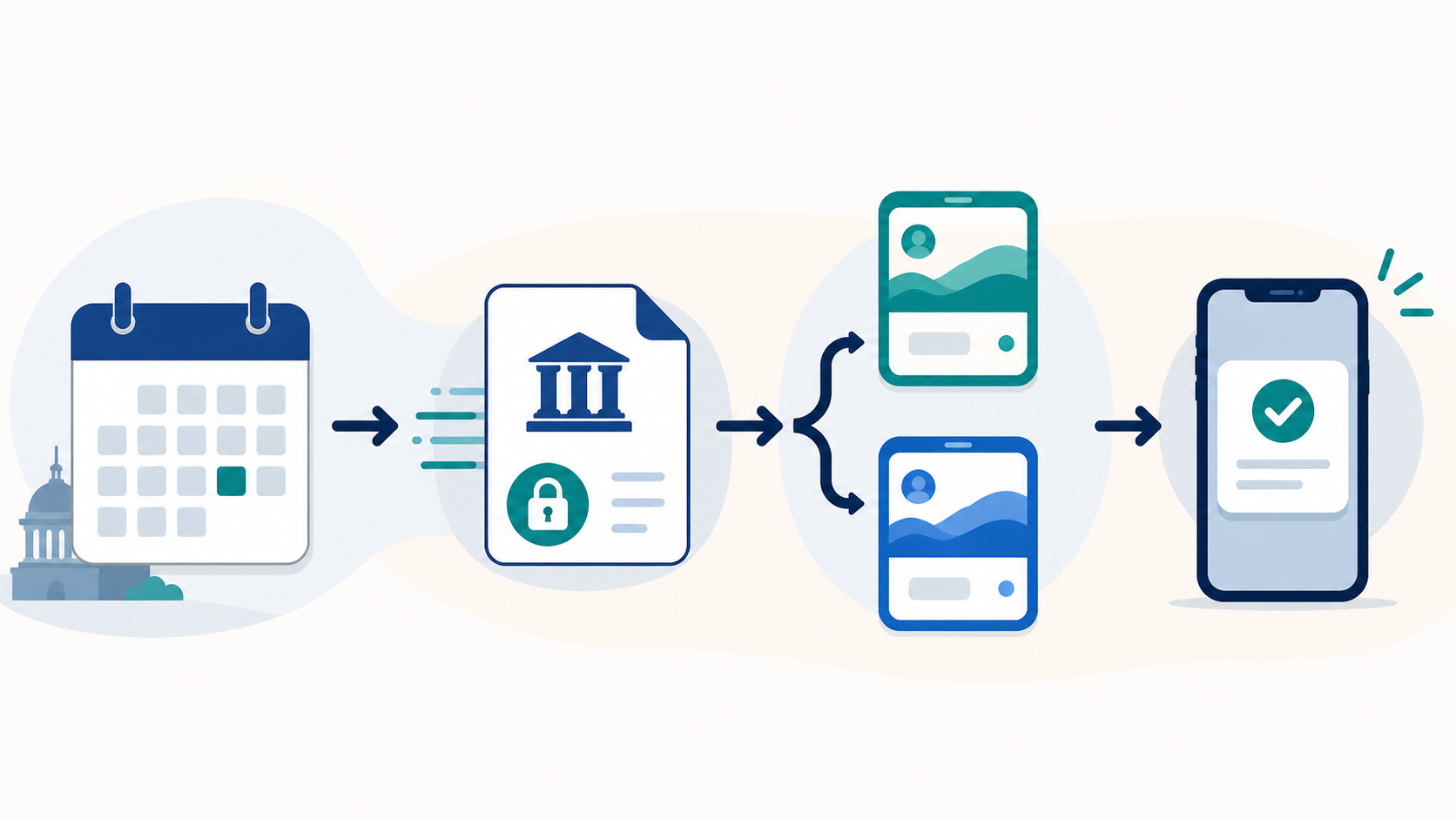
If you receive Supplemental Security Income, choosing Chime or Cash App does not change the date on the Social Security Administration’s calendar. SSA sets the official SSI payment date. A financial app may make an incoming ACH deposit available before that date, but early access depends on when the payment file reaches the provider and how that provider processes it. It is not an extra benefit, and it is never a guaranteed appointment on the calendar.
That distinction matters because an “early pay” claim can sound more precise than it is. Chime says it makes eligible direct deposits available when it receives the payment file, while Cash App advertises direct deposits up to two days early compared with many banks. Neither statement promises that every SSI payment will arrive early, that one app will always beat the other, or that money will appear at a particular hour.
This guide compares the documented policies behind SSI direct deposit on Chime and Cash App in 2026. It shows which date you can safely budget around, what an early deposit actually means, how to change your deposit information without exposing sensitive data, and what to check if the money has not appeared. It does not publish a speculative early-payment calendar. For the complete government schedule, use our 2026 SSI payment schedule alongside the official SSA calendar.
SSI on Chime vs Cash App: the short answer
For payment-date purposes, neither app wins. Your SSI is still due on the date assigned by SSA. Chime and Cash App sit at the receiving end of the electronic-payment process. They can choose to credit an eligible incoming deposit before its scheduled date when they have the necessary payment information, but they cannot require Treasury to send that information on a consumer-facing timetable.
| Question | Chime | Cash App |
|---|---|---|
| Who sets the official SSI date? | SSA, not Chime | SSA, not Cash App |
| Can a deposit be available early? | Possibly; Chime says up to two days early when it receives the payment file | Possibly; Cash App advertises direct deposit up to two days early compared with many banks |
| Is early access guaranteed every month? | No | No documented guarantee |
| Is there a guaranteed posting hour? | No | No |
| Does an app change the benefit amount? | No | No |
The safest way to plan rent, utilities, and automatic withdrawals is to use the official SSI date, not the earliest deposit somebody reports online. An early credit is useful when it occurs, but treating it as the due date creates a fragile budget. If the app does not credit the money early this month, that alone does not mean SSA missed your payment.
There is also no reliable basis for saying that Chime always posts before Cash App or vice versa. Individual reports can reflect different benefit types, account changes, time zones, payment-file batches, or even unrelated deposits. A fair comparison focuses on documented terms, account access, alerts, support, and your comfort with the service—not a crowdsourced race that can change from one payment cycle to the next.
Start with the official 2026 SSI payment date
SSI follows a simpler rule than most Social Security retirement or SSDI payments. SSA generally schedules SSI for the first day of the month for which the benefit is due. If the first is a Saturday, Sunday, or federal holiday, the payment moves to the last business day before it. Your birthday does not select an SSI payment Wednesday.
The move into the prior month sometimes creates confusing bank statements. For example, SSA scheduled the August 2026 SSI payment for Friday, July 31 because August 1 was a Saturday. It schedules the November 2026 benefit for Friday, October 30 because November 1 is a Sunday. Those entries do not represent bonus checks. Each remains the regular benefit for the named month, simply delivered under the prior-business-day rule.
Use the date printed on SSA’s official calendar as your dependable reference. Treasury says federal direct-deposit money is available the morning of the payment date. A provider may release an incoming credit before then, but the earlier appearance does not replace SSA’s date or create a new deadline that the agency missed. In practical terms:
- Before the official date: no deposit may only mean early access did not occur.
- On the official date: check the account activity, app status, and any provider notice.
- After the official date: begin the missing-payment checks described later in this guide.
Do not rely on a screenshot labeled “Chime SSI calendar” or “Cash App SSI date” unless you first match the underlying month to SSA. Social posts can confuse SSI with Social Security, SSDI, Veterans benefits, or a retroactive payment. Our 2026 Social Security payment schedule explains the different birthday-based rules, while the SSI-only calendar lists every official SSI date.
How Chime handles an SSI direct deposit
Chime describes early direct deposit as a file-receipt feature. Once Chime receives an eligible payment file from the payer, it generally makes the funds available rather than waiting for the scheduled settlement date. Because a payer can submit that file at different points in the cycle, Chime says availability may be up to two days early and specifically warns that early access is not guaranteed every pay period.
That mechanism explains why a fixed “Chime SSI deposit time” is misleading. The useful event is not midnight in a particular time zone; it is Chime’s receipt and processing of the correct deposit instruction. Chime also says it does not display direct deposits as pending. If the money is not posted, the app cannot necessarily show you a hidden federal payment waiting in a queue.
For an established account, enable push and email notifications and review the deposit activity inside the app. Chime says it sends those alerts when a direct deposit arrives. An estimated-arrival feature based on prior account history may help you watch the account, but it is an estimate produced by Chime, not a change to the official SSA schedule.
What can prevent an early Chime credit?
Chime lists several reasons a deposit may not appear early: the payer may submit on the scheduled date, account or amount details may have changed, a holiday may affect submission, or this may be the first cycle after a switch. A mismatched name or incorrect routing information can also lead to delay or rejection. The practical lesson is simple: compare the result with the official SSI date before treating it as late.
When setting up SSI, use the account and routing numbers Chime supplies for your specific account or its completed direct-deposit form. Do not copy bank details from a blog post, another member, or an old screenshot. Chime’s partner-bank details can differ by account, and only the information displayed for you should be given to SSA through an official channel.
How Cash App handles an SSI direct deposit
Cash App’s current U.S. terms expressly include government-benefit payments sent by a government agency through ACH in its definition of qualifying deposits. The direct-deposit program credits funds sent to the routing and account numbers provided for your Cash App balance. That is the relevant pathway for SSI; sending money to a $cashtag or linking an unrelated debit card is not the same as enrolling an SSA direct deposit.
Cash App markets direct deposit as arriving up to two days early compared with many banks. Another official Cash App page says it makes deposits available as soon as they are received. Read those statements together: “up to” describes a possible maximum advantage, while “received” identifies the event that makes the credit possible. Neither establishes a recurring SSI payday earlier than SSA’s date.
Cash App also notes that a first direct deposit may take longer. That is particularly important after changing the destination at SSA. Continue watching the old account until the change has actually taken effect, and do not spend against a hoped-for early Cash App credit. A successful test transfer between friends does not prove that Treasury has the new ACH instructions.
Check the account, not a viral schedule
Review your Cash App activity and current account disclosures in the app. The company describes real-time transaction alerts, but an alert can only report a credit after Cash App processes it. It cannot tell you when SSA or Treasury will originate a future file. A user post claiming the deposit “always hits” on a certain afternoon is not a substitute for an account-specific status.
Cash App is a financial-services platform, not itself a bank, and it uses partner banks for banking services. Account eligibility, partner-bank disclosures, limits, and pass-through deposit-insurance conditions can change. If those details affect your choice, read the current terms shown for your own account instead of relying on a static comparison. The timing question remains narrower: Cash App can receive government-benefit ACH deposits, but it does not control the official SSI payment date.
Chime vs Cash App: what the evidence actually supports
The available evidence does not identify a permanent speed winner. Both providers promote early direct deposit up to two days, and both depend on receiving the incoming payment information. A person who saw Cash App first once has not conducted a controlled test; neither has a person whose Chime notification appeared first. Their accounts may have received different files or been checked at different moments.
Choose between the services using questions you can actually answer:
- Can you find and verify your own routing and account numbers without copying them into an insecure message?
- Are deposit and low-balance alerts easy for you to enable and understand?
- Can you reach official support in a way that works with your hearing, vision, language, or device needs?
- Do the current account, fee, card, and deposit-insurance disclosures fit how you plan to hold and spend the money?
- Do you have a backup way to pay essentials if a phone is lost, locked, or temporarily offline?
Those factors can matter more than an occasional early credit. SSI may be a household’s only reliable monthly income, so access and support failures have real consequences. Review each provider’s current terms for the account you are offered. Do not assume that every Cash App balance or every Chime product has the same structure merely because both appear inside a phone.
For budgeting, give both providers the same score on the only date that is official: the SSA payment date. Treat anything earlier as conditional convenience. If an automatic bill is due before the official date, an early-deposit history is not sufficient protection against an overdraft or failed payment. Move the bill date, build a cushion when possible, or ask the biller about a due-date adjustment instead of betting on a payment file.
How to switch your SSI direct deposit safely
Open and verify the new account before asking SSA to redirect SSI. In the authenticated Chime or Cash App interface, locate the routing number, account number, and any provider-specific direct-deposit instructions. Confirm that the account is eligible for incoming ACH deposits and that your legal name is accurate. Never use routing information copied from another person.
Next, use an official SSA channel. SSA’s current FAQ says the online direct-deposit change service is not presently available to people who receive SSI, even though online changes can be available for some Social Security benefits. An SSI recipient can call SSA at the number shown on SSA.gov or contact a local Social Security office. The broader SSA update page also says some financial institutions can transmit an update through the Automated Enrollment process, but not every provider offers it.
- Write down the old and new account details from trusted statements or authenticated apps.
- Start from SSA.gov or a phone number you independently verified—not a link in an unsolicited text.
- Ask when the change is expected to take effect and save any confirmation provided.
- Keep the old account open and monitored until SSA confirms the update and an SSI payment reaches the new account.
- After the first successful deposit, update bills and alerts; then close the old account only when no payment or debit still depends on it.
A direct-deposit switch is not a reason to pay a fee to a caller or disclose your login code. SSA says it will not demand gift cards, cryptocurrency, wire transfers, or personal banking details through social media, email, or text. Chime and Cash App support also should not need your password or one-time sign-in code to tell you where to find account instructions.
If a helper or representative payee assists you, share information only through the channel required for that authorized role. Do not paste an SSN, benefit letter, routing number, account number, or screen recording into a public forum. Our detailed guide to changing SSI direct deposit explains the channel options and online limitation in more depth.
What to do if the SSI deposit has not appeared
First ask whether the official date has arrived. If today is merely a date on an unofficial early-pay calendar, the payment is not yet missing under SSA’s guidance. Recheck the SSA calendar, including its weekend and holiday adjustment, and make sure you are looking for SSI rather than a separate Social Security or SSDI deposit.
On the scheduled pay date, follow an evidence trail:
- Refresh the correct Chime or Cash App account and review completed activity, alerts, and any service-status message.
- Confirm whether a recent direct-deposit change was effective and check the old destination if it remains open.
- Contact the receiving provider through its authenticated app or official website. Ask whether it sees a rejected or returned ACH item.
- If SSA or Treasury confirms the payment was sent, ask whether a trace or transaction reference is available. Chime specifically says an ACH trace number can help its support team investigate receipt.
- If the provider still cannot locate the deposit, report the missing payment to SSA through the contact information on SSA.gov or your local office.
This order follows SSA’s public instruction to contact the financial institution first when an electronic payment is not received on its scheduled date. SSA can then review a late, missing, or stolen payment and determine whether a replacement is due. Do not file duplicate reports with strangers who claim they can “release” the deposit for a fee.
Escalate promptly if the app shows a deposit followed by an unauthorized transfer, if the destination changed without your permission, or if your account credentials no longer work. Tell the provider that the issue may involve account takeover, and tell SSA that you suspect an unauthorized direct-deposit change. Preserve notices and transaction details privately; do not upload them to a public group.
If the missing benefit creates an immediate food, housing, utility, or medical emergency, explain that clearly when you contact SSA. The agency has limited expedited or immediate-payment procedures for qualifying situations, but eligibility is case-specific and not something Chime or Cash App can approve. Use our missing Social Security payment checklist to prepare the date, provider response, and safe next steps.
Frequently asked questions
Does Chime pay SSI earlier than Cash App?
There is no official evidence that Chime always pays SSI before Cash App. Both advertise direct deposits up to two days early, and actual availability depends on receipt and processing of the payment information. Compare your own account experience, current terms, support, and access features, but budget from the SSA date.
What time does SSI hit Chime or Cash App?
Neither provider publishes a guaranteed SSI posting hour. Chime says it makes funds available when it receives the payment file, and Cash App says deposits can be available when received. That event can vary. A clock time reported by another user is not a reliable promise for your account, month, or time zone. Our direct-deposit tracking guide explains which account evidence is useful.
Why did I receive two SSI deposits in one month?
Check the benefit month attached to each payment. When the first of the next month is a weekend or federal holiday, SSA schedules that next month’s SSI payment on the prior business day. You may therefore see the current month’s regular payment and the following month’s payment in one calendar month. The second deposit is not a bonus, and there may be no SSI deposit during the following calendar month because it arrived early under the official rule.
Should I worry if an estimated early date passes?
Not solely because the estimate passed. Confirm the official SSA date. Before that date, continue monitoring without treating the payment as missing. If it is absent on the official date, contact Chime or Cash App through a verified support channel first, then contact SSA if the provider cannot locate it.
Will switching to Chime or Cash App change my SSI amount or official date?
No. The receiving account does not determine eligibility, benefit calculation, COLA, or SSA’s scheduled date. It only affects where an authorized electronic payment goes and whether the provider chooses to make an eligible incoming credit available early. Report income, resources, living-arrangement changes, and account changes to SSA as required; an app switch does not replace those responsibilities.
Bottom line: Chime and Cash App can both receive qualifying government-benefit ACH deposits, and early access may occur. The SSA calendar is the dependable scheduling benchmark; no app can guarantee an individual deposit date or hour. Verify account details privately, treat provider estimates as estimates, and use the provider-first, SSA-second path when an electronic payment is actually missing.
Loading comments...