
Updated September 19, 2026. An SSI redetermination is SSA's check that the nonmedical facts supporting Supplemental Security Income are still accurate. The review can confirm the payment, raise or lower it, identify an underpayment or overpayment, or find that eligibility has changed. Preparation works best when records are organized around income, resources, and living arrangements rather than around fear of a “gotcha” interview.
Privacy reminder: This independent site cannot complete a redetermination or inspect SSA records. Send financial and identity documents only through the channel SSA specifies.
What an SSI redetermination is in 2026
SSI is means-tested. Eligibility and payment can change when countable income, countable resources, marital or household facts, or support arrangements change. SSA therefore rechecks nonmedical facts after approval. Its public 2026 guide says most recipients have a redetermination every one to six years, although a reported change can prompt an additional review.
SSA's fiscal-year 2026 instructions established a combined processing goal of 2.6 million redeterminations and limited-issue reviews. That workload explains why many recipients may receive notices, but the selection of an individual case is not a finding of fraud or an advance decision that benefits must stop.
Redetermination is different from a medical review
A nonmedical redetermination asks whether the financial and household requirements remain satisfied and whether SSA is paying the correct amount. A continuing disability review, or CDR, asks whether the medical disability continues under the applicable standard. One process can occur without the other, and they use different evidence.
A child reaching age 18 can also face an age-18 disability redetermination under adult disability rules. That is not the routine financial review described here, although SSA may address financial facts around the same period. Read the notice heading and evidence request before gathering years of medical records that SSA did not ask for.
Why SSA may select a case now
Cases can come up through a scheduled cycle, an internal diary, a change reported by the recipient or payee, or a limited issue that suggests another factor needs development. SSA's 2026 staff instructions prioritize certain profiles and payment issues, including some records affected by disaster assistance or revised living-arrangement policy.
A notice does not tell you that another recipient was treated the same way, and online anecdotes cannot explain why your record was selected. Focus on the review period and items named in the letter. If the appointment is unexpected, verify it using an official SSA number before disclosing information.
The three areas SSA reviews
The public redetermination guide names income, resources, and living arrangements. If the recipient is married, or is a disabled child under 18 living with parents, SSA may also examine facts for a spouse or parents under deeming rules. The question is not simply what appears in one account today; SSA is reconstructing eligibility and payment over the stated review period.
Income received by you and people whose income may count
Gather wage stubs, tax or self-employment records when requested, pension and annuity statements, unemployment or workers' compensation information, and proof of other cash received. Note when income was received, whose it was, and what period it covered. The month worked and the month paid may differ, which is why a simple annual total can obscure the payment calculation.
A deposit is evidence, not automatically countable SSI income. Moving money between one's own accounts, receiving a documented loan, obtaining a refund, or receiving an excluded payment can create a deposit without the same SSI treatment as wages or a gift. Preserve the statement and the record that explains the source. The site's SSI income guide provides context, but SSA must classify each actual item.
Resources, bank accounts, property, and exclusions
SSA may ask for complete checking and savings statements, certificates or bonds, cash-value life insurance, burial arrangements, vehicles, real property, trusts, and other things that can be owned and converted to cash. It may need beginning and ending balances across multiple months, not a screenshot from the day before the interview.
Ownership and availability matter alongside value. A jointly titled account, a restricted trust, a vehicle, a home, or money reserved under a specific exclusion cannot be classified reliably from its name alone. Assemble title documents, restrictions, source records, and valuation evidence that SSA requests. Do not move or retitle an asset merely to make a statement look smaller; unexplained transfers can create additional questions. See the SSI asset-limit guide for the baseline rules.
Living arrangements and household contributions
Prepare a lease or mortgage record, utility bills, and a list of household members for the review period. Show who was legally responsible, what the recipient paid, and whether anyone else regularly covered shelter. If the arrangement changed, identify the move date, new household, and when the new expense-sharing pattern began.
SSA stopped counting food in in-kind support and maintenance calculations under the rule implemented September 30, 2024, but shelter arrangements can still affect SSI. Do not omit a roommate or relative because they buy groceries, and do not assume sharing a home always reduces payment. The financial terms and household facts control. The living-arrangements guide explains the concepts in more detail.
Build a document file before the interview
Begin with the appointment letter or form. Highlight the response date, review period, interview method, and specifically requested documents. SSA's general list is broad, and its public guide says not every case needs every item. Bringing hundreds of unrelated pages can hide the one month or transaction the reviewer needs.
Match records to the review period
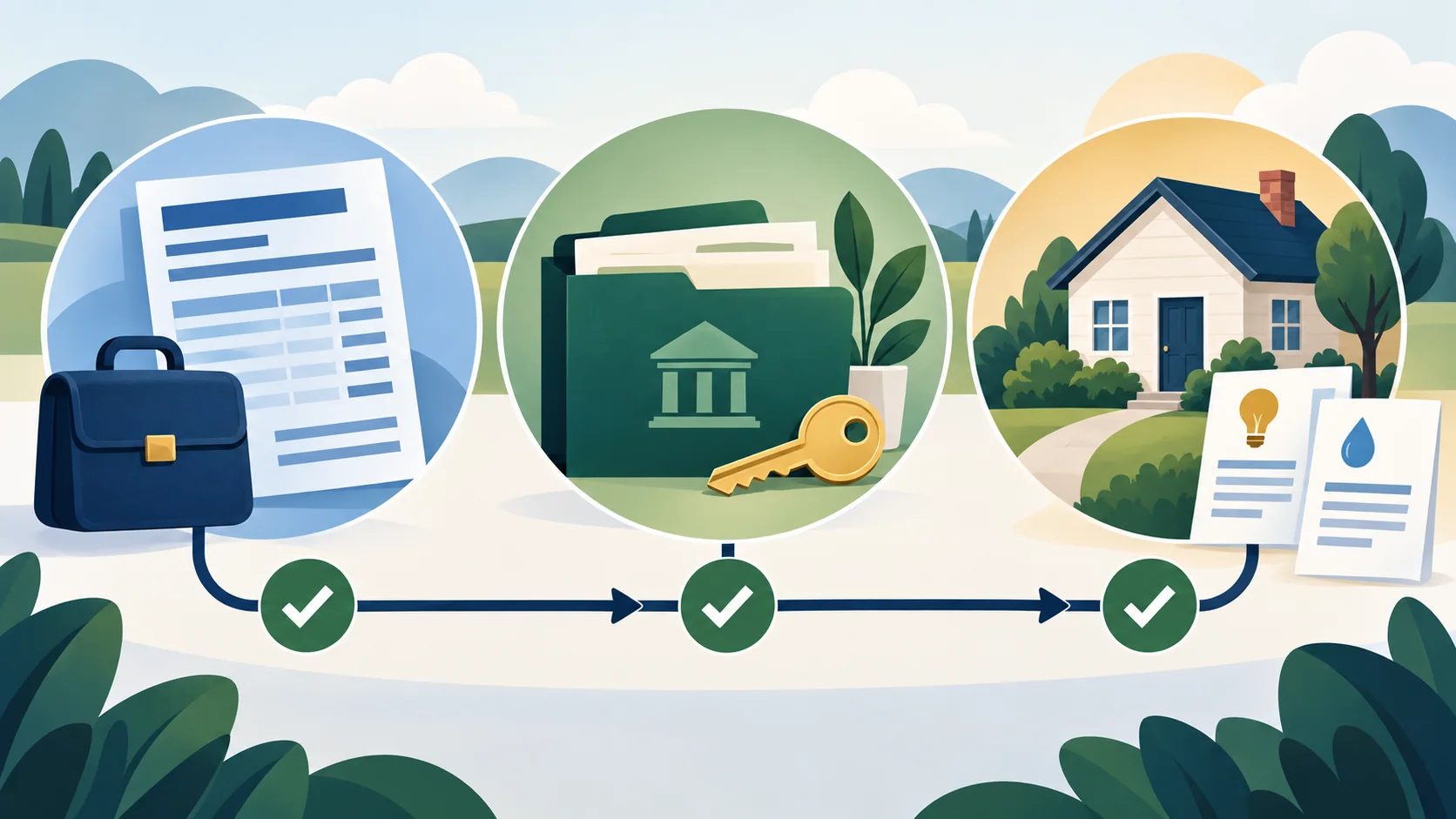
Create three folders—income, resources, and living arrangements—and sort within each by month. For income, pair a pay stub with its bank deposit and note the work period. For resources, keep full statement pages so account ownership, balances, and transactions are visible. For housing, align leases, bills, receipts, and address changes to the months they applied.
Keep originals unless SSA specifically instructs otherwise, and submit copies or uploads only through the authorized method. If an online upload is offered, confirm the file belongs to the correct request before sending it. Maintain a list of what was provided, when, and how, while storing sensitive files securely.
Explain mismatches instead of guessing
Records rarely line up perfectly. A pay date may lag the work week, a refunded purchase may resemble new income, or a household member may move midmonth. Write a short factual explanation and attach the source document. If you do not know an exact date, say what you know and what record might establish it rather than inventing precision.
If a bank, employer, landlord, or insurer no longer has a record, tell SSA promptly and ask what substitute evidence it will accept. A contemporaneous letter, tax record, account closure notice, or third-party statement may help, but acceptance is case-specific. An unexplained gap is harder to evaluate than a documented attempt to obtain the record.
What happens during the redetermination
Telephone, in-person, and form-based cases
SSA's public 2026 guide says a redetermination may occur by telephone, in person, or by mail. For an interview, SSA sends an appointment letter and its employee enters answers on the forms. For a mail case, SSA sends a form to complete, sign, and return. If the appointment cannot be kept, the recipient should contact SSA to reschedule rather than simply miss it.
Current internal instructions add process detail. POMS SI 02305.031, updated September 16, 2026, says Claims System redeterminations should use a telephone or face-to-face interview and that SSA-8203-BK is not a self-help form. That does not make a form actually mailed by SSA invalid. It means recipients should follow their case letter, accept staff help, and avoid downloading a third-party copy of SSA-8202 or SSA-8203 and assuming it replaces the scheduled contact.
What a representative payee must do
When a representative payee is appointed, SSA generally directs the redetermination request to the payee. The payee must participate, give accurate beneficiary information, and sign a mailed form when that method applies. The payee should still involve the beneficiary as appropriate because the recipient may know about work, a move, or another change first.
Prepare records for the beneficiary's funds and household, including a correctly titled payee account. The payee's own finances are not automatically the recipient's resources, although ownership, deeming, or shared household facts may make particular information relevant. Ask why a requested item is needed if the connection is unclear; do not withhold a document based only on an online generalization.
How SSA's 2026 data tools affect the review
SSA announced in July 2026 that it had expanded Access to Financial Institutions, fully implemented the Payroll Information Exchange, and strengthened nonmedical redeterminations. These tools help verify facts and reduce improper payments. They do not supply all the context needed to classify an account, deposit, job, or exclusion.
Access to Financial Institutions and bank records
SSA describes AFI as a way to identify payment problems earlier and avoid large overpayments. A financial-account match can show that an account or balance needs development. It cannot by itself tell the whole story of ownership, restricted access, excluded funds, or the source of every transaction.
Give complete statements for the requested period and label unusual items. If an account is joint, closed, restricted, or held in a representative-payee capacity, provide the title and supporting record. Do not assume that leaving an account off a list will prevent discovery, and do not assume a data match means SSA has already decided the account is countable.
Payroll Information Exchange and wage data
SSA says PIE makes wage information more timely and can reduce reporting burden. A wage match can help SSA compare employer data with the SSI record, but timing and classification still matter. Payroll systems can contain corrections, duplicate entries, delayed checks, or earnings belonging to a different period.
Continue to follow the reporting instructions SSA gives. Keep pay stubs and report work or wage changes through an approved channel even if you believe SSA will receive payroll data automatically. Self-employment, cash work, or employers outside a data exchange may require different evidence. Technology is a cross-check, not a substitute for an accurate recipient explanation.
Prevent a response problem from becoming a payment problem
Respond within the notice deadline or reschedule
SSA's public guide gives 30 days to respond to the appointment letter, return the requested form, or explain that you cannot keep the appointment or need help. Use the exact date and instructions in your notice. If records will take longer, contact SSA before the deadline, explain what has been requested, and document the conversation or extension guidance.
Ignoring the request can cause more than a delayed review. SSA warns that payments may stop and that the record may develop an overpayment or underpayment. If SSI eligibility ends, Medicaid eligibility tied to SSI may also be affected. A quick response saying “I need to reschedule and am obtaining the bank statements” is more useful than silence.
Read and challenge the result notice promptly
After the review, compare SSA's findings with the documents submitted. Look for the months affected, the income/resource/living-arrangement finding, the new payment amount, any overpayment or underpayment, effective date, and appeal instructions. A lower payment can reflect a classification or timing disagreement rather than a math error visible on the first page.
SSA's 2026 appeal guidance generally gives 60 days after receipt to request reconsideration of an initial determination. For a nonmedical SSI determination, a written request within 10 days of receiving the notice can keep the current payment going during reconsideration if other eligibility continues. A request filed after 10 days but within 60 days may involve a temporary reduction before payment is restarted when SSA enters the appeal. The notice controls and quick action matters.
Continued payments are not automatically free from repayment risk. If the appeal is unsuccessful, amounts continued during review can become an overpayment under applicable rules. Ask SSA or a qualified representative to explain the choice and the notice. Keep proof of filing and the evidence that addresses the specific disputed finding.
SSI redetermination checklist for 2026
- Verify the request. Use SSA.gov or a known SSA number if the contact was unexpected. Do not respond through an unsolicited link.
- Mark the response date and review period. Record the appointment, the 30-day instruction where applicable, and the months SSA wants documented.
- Identify the review. Confirm whether it is a full nonmedical redetermination, limited-issue review, medical CDR, or age-18 disability redetermination.
- Build three evidence folders. Organize income, resources, and living arrangements by month, including spouse/parent information when deeming may apply.
- List changes and unusual transactions. Note jobs, moves, marriage/separation, household changes, account openings/closures, loans, transfers, refunds, and excluded payments.
- Ask for missing records early. Tell SSA when a third party cannot produce a document and ask which substitute will be accepted.
- Follow the assigned process. Attend the interview or return the form SSA sent. Do not assume a downloaded SSA-8202/8203 replaces the appointment.
- Keep a submission trail. Record what was delivered, the channel and date, and any confirmation without placing sensitive documents in an unsecured file.
- Review the result immediately. Compare findings month by month and use the notice's reconsideration and payment-continuation instructions if you disagree.
Do not send documents here: SocialSecurityPayment.net is independent and cannot receive bank statements, wage records, leases, SSNs, claim numbers, or SSA credentials. Use only the channel named by SSA.
A strong redetermination response is complete, chronological, and candid about gaps. SSA's 2026 tools may identify an account or wage item sooner, but the recipient's records explain what the item was and when it applied. Organizing that explanation before the interview reduces follow-up and makes a wrong result easier to challenge.
Primary sources: SSA's 2026 redetermination guide; FY 2026 redetermination instructions; current interview-method POMS; SSA's 2026 SSI improvements release; and SSI appeal guidance.
Loading comments...