
Updated September 2, 2026. The most reliable Chime SSDI payment schedule for 2026 is the official Social Security Administration schedule—not a bank-specific prediction. If your SSDI follows the standard birthday cycle, SSA schedules it for the second, third, or fourth Wednesday of each month. Some people instead receive Social Security on the 3rd because their benefits began before May 1997 or because they receive both Social Security and SSI.
Chime may make a qualifying government-benefit direct deposit available up to two days early after it receives the payment file. That wording describes a possibility, not a promise. It does not create a separate official Chime calendar, guarantee the same early day every month, or guarantee a particular posting hour. For bills and essential spending, use the SSA date in this guide as your dependable planning date; treat anything earlier as conditional access to the same payment.
Quick answer: Find your official SSA date first. If the deposit appears in Chime before that date, it is early—not an extra SSDI payment. If it has not appeared during an expected early window, it is not late merely because an unofficial calendar predicted an earlier day.
This independent guide explains the two timelines, lists every official 2026 SSDI birthday date, covers the legacy and combined-benefit exceptions, and gives a practical way to investigate a deposit that has not arrived. SocialSecurityPayment.net is not affiliated with SSA or Chime and cannot see your benefit or bank account.
There Is No Official Chime SSDI Payment Calendar
SSA publishes the official payment schedule. Chime does not replace that schedule, and SSA does not publish a separate set of guaranteed “Chime SSDI dates.” What people often call a Chime schedule blends two different events:
- Official payment date: the date on SSA's calendar for your payment group.
- Possible Chime availability date: an earlier date on which Chime may release the funds after receiving the payment file.
The distinction matters. SSA can tell you when your benefit is scheduled. Chime can explain its deposit policy and whether it has received information for your account. Neither source promises that every SSDI deposit will become available a fixed number of days before SSA's date.
| Question | Best authority | What it can confirm |
|---|---|---|
| Which date is my SSDI scheduled? | SSA calendar, benefit notice, or my Social Security | Your official payment group and date |
| Has Chime received or posted my deposit? | Your Chime app or Chime support | Account activity and institution-side information |
| Will it always arrive two days early? | No source can guarantee this | “Up to” means zero, one, or as many as two days early may occur |
A date shown in a social post, forum graphic, or third-party calculator is not official merely because it matched a previous month. Payment-file delivery can change. The same caution applies to clock-time claims: Chime's government-benefit guidance does not guarantee that SSDI posts at midnight, in the morning, or at one universal hour.
Use the official 2026 Social Security payment schedule as the baseline. Then check Chime for actual account activity. That order prevents an expected early-access day from being mistaken for a late federal payment.
Official 2026 SSDI Dates to Use as Your Baseline
The table below reproduces the standard 2026 Social Security birthday cycle from SSA's annual calendar. These are official SSA payment dates. They are not promised Chime posting dates and have not been shifted backward to create an “early” calendar.
| Payment month | Birthday 1st–10th | Birthday 11th–20th | Birthday 21st–31st |
|---|---|---|---|
| January 2026 | Wednesday, January 14 | Wednesday, January 21 | Wednesday, January 28 |
| February 2026 | Wednesday, February 11 | Wednesday, February 18 | Wednesday, February 25 |
| March 2026 | Wednesday, March 11 | Wednesday, March 18 | Wednesday, March 25 |
| April 2026 | Wednesday, April 8 | Wednesday, April 15 | Wednesday, April 22 |
| May 2026 | Wednesday, May 13 | Wednesday, May 20 | Wednesday, May 27 |
| June 2026 | Wednesday, June 10 | Wednesday, June 17 | Wednesday, June 24 |
| July 2026 | Wednesday, July 8 | Wednesday, July 15 | Wednesday, July 22 |
| August 2026 | Wednesday, August 12 | Wednesday, August 19 | Wednesday, August 26 |
| September 2026 | Wednesday, September 9 | Wednesday, September 16 | Wednesday, September 23 |
| October 2026 | Wednesday, October 14 | Wednesday, October 21 | Wednesday, October 28 |
| November 2026 | Tuesday, November 10 | Wednesday, November 18 | Wednesday, November 25 |
| December 2026 | Wednesday, December 9 | Wednesday, December 16 | Wednesday, December 23 |
To read the table, use the birthday of the worker whose earnings record supports the benefit. For your own SSDI, that is usually your birthday. A disabled adult child or another beneficiary paid on someone else's record may need the number holder's birthday instead. Your SSA notice or account is the safest place to confirm the applicable payment group.
November is the visible exception in the standard columns: the 1st–10th group is paid Tuesday, November 10, 2026, because Wednesday, November 11 is Veterans Day. Do not manually move other rows based on an unofficial banking calendar; SSA's published row is the baseline.
If none of these birthday rows looks familiar, do not assume your deposit is missing. You may be in the 3rd-of-the-month group covered next. For a fuller explanation of benefit months and schedule rules, see the existing 2026 SSDI payment calendar guide.
Check the 3rd-of-the-Month Exceptions Before Using Your Birthday
The birthday table is not universal. SSA generally uses a different cycle if you started receiving Social Security benefits before May 1997 or if you receive both a Social Security benefit and SSI. In those cases, Social Security is generally scheduled for the 3rd of the month and SSI for the 1st, with calendar adjustments when needed.
For a person in that exception group, the official 2026 Social Security dates are:
| Payment month | Official Social Security date for the 3rd-day cycle |
|---|---|
| January 2026 | Friday, January 2 |
| February 2026 | Tuesday, February 3 |
| March 2026 | Tuesday, March 3 |
| April 2026 | Friday, April 3 |
| May 2026 | Friday, May 1 |
| June 2026 | Wednesday, June 3 |
| July 2026 | Thursday, July 2 |
| August 2026 | Monday, August 3 |
| September 2026 | Thursday, September 3 |
| October 2026 | Friday, October 2 |
| November 2026 | Tuesday, November 3 |
| December 2026 | Thursday, December 3 |
These are already the adjusted dates printed on SSA's 2026 calendar. For example, the January, May, July, and October rows do not land on the calendar's literal 3rd. Do not shift them again. Chime might provide access before an official date after receiving the file, but the table itself is not an early-deposit forecast.
If you receive both programs, expect two separately identified benefits: SSI and Social Security. An early SSI deposit and an SSDI deposit can appear close together, but neither is a “bonus,” and one should not be used to predict the other. Use the 2026 SSI payment schedule for the SSI portion and your SSA notice to confirm whether your Social Security payment follows this exception cycle.
What Chime's “Up to Two Days Early” Wording Really Means
Chime lists SSDI and other government benefits among qualifying direct deposits. Its early-access feature depends on the payment information reaching Chime before the scheduled settlement date. Once Chime receives a qualifying file, it may make the money available instead of waiting until the official date. That operational sequence—not a second government calendar—is the basis for “up to two days early.”
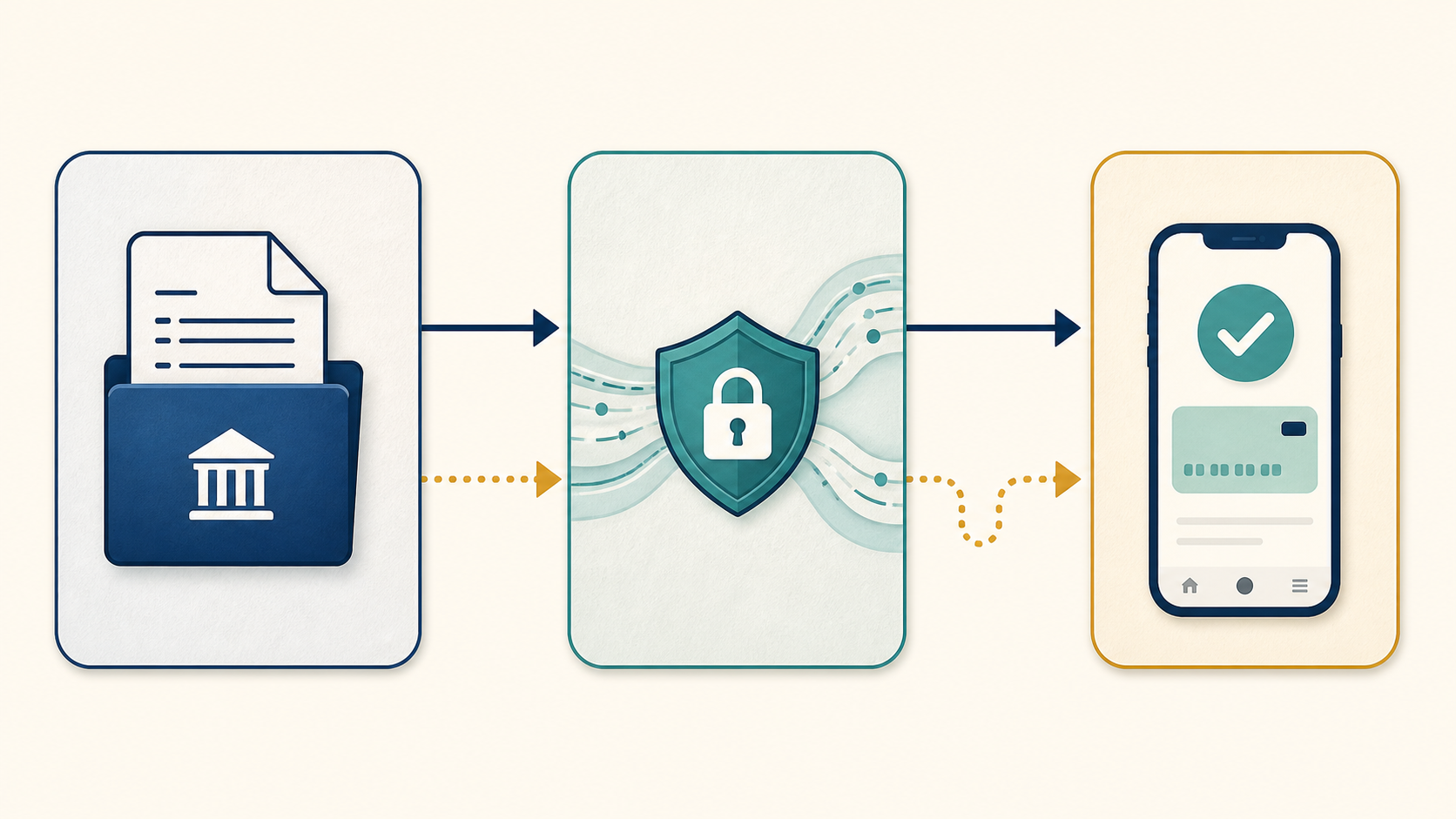
- SSA and the federal payment system prepare and transmit the payment information.
- Chime receives the deposit file for the correct account.
- Chime applies its availability policy and posts the deposit to the member's balance.
The word up to is essential. It permits a range. A deposit could be available two days before the SSA date, one day before it, or on the official date. Chime's help material says early arrival is not guaranteed every pay period. It also notes that a first direct deposit may not arrive early.
Safe interpretation: “My SSDI may become spendable before SSA's official date if Chime receives the file early.”
Unsafe interpretation: “Chime promises my SSDI exactly two days early at the same hour every month.”
Do not automatically translate “two days” into “two business days,” subtract 48 hours from the SSA calendar, or promise a Friday deposit whenever the official date is Monday. Holidays and payment-file processing can affect the sequence, and Chime's government-benefit help page says it cannot guarantee the timing.
Early availability also does not change the benefit month, increase the benefit, or create a second payment. It gives earlier access to the same federal deposit. Your amount and entitlement remain governed by SSA records; Chime cannot decide eligibility or recalculate your SSDI.
For that reason, an early Chime deposit is useful when it happens, but it should not be the date used for rent, automatic withdrawals, or other obligations that could trigger a fee if the prediction is wrong. Budgeting from the official SSA date leaves the early feature as a cushion rather than a promise.
Why a Chime SSDI Deposit Can Vary From Month to Month
A deposit arriving early last month does not establish a permanent schedule. The official SSA date may be predictable, while the earlier file-receipt event is not publicly scheduled for individual Chime accounts. Small changes in the processing chain can therefore change when the balance becomes available.
- Payer file timing: Chime says early availability depends on when the payer sends and Chime receives the deposit information.
- First-cycle timing: Chime notes that a first direct deposit may not arrive early. A newly changed account can also require the reader to confirm which institution SSA has on file.
- Weekends and federal holidays: nonbusiness days can affect processing, but they do not justify inventing a universal “previous Friday” rule. Use the date SSA actually publishes.
- Changed payment details: a change in amount, account destination, or benefit status may break the pattern seen in deposit history.
- App estimates: an estimated arrival derived from prior deposits is a planning hint, not proof that Chime currently holds the next SSDI file.
Chime's help center says the app does not display pending deposits. In practical terms, absence of a deposit in the app during an unofficial early window can simply mean Chime has not received the file yet. It does not, by itself, establish that SSA missed the official date.
There is also no reliable universal answer to “what time will SSDI hit Chime?” One member's afternoon posting, or even several similar reports, does not create an institution-wide clock. Notifications, time zones, app refreshes, and file arrival can make personal observations differ. The existing guide to direct-deposit posting times explains the same bank-versus-payer distinction in more detail, although SSI uses a different official schedule.
When comparing months, write down only nonsensitive details: the official SSA date, the date the balance actually became available, whether it was the first deposit after an account change, and whether a holiday was involved. Never post an SSN, claim number, bank account or routing number, Chime login, or benefit notice in a forum to crowdsource a prediction.
How to Read Chime Estimates and Reddit Calendars Safely
Reddit threads and shared early-pay calendars reveal genuine reader concerns: people ask whether “SSA” means SSDI or retirement, whether an SSI date applies to them, and whether anyone else has been paid. Those questions are useful for understanding confusion. The answers, screenshots, colored dates, and personal posting times are not authoritative evidence for your 2026 payment.
Use this source order:
- SSA calendar, notice, and account: use these to identify your program, payment group, and official date.
- Chime app and official Chime support: use these to check actual account activity and the institution's current policy.
- Independent guides: use them to understand rules, but verify dynamic dates against SSA.
- Reddit and social posts: treat them as personal experiences or questions, never as a guarantee.
Before trusting a calendar image, ask four questions. Does it identify SSDI rather than SSI or VA benefits? Does it show the official SSA date separately from a possible early date? Does it link to the current SSA calendar? Does it clearly say that the early date can change? If any answer is no, do not schedule an essential payment around the image.
A Chime app estimate also needs context. It may reflect your prior deposit history, but Chime says it does not show pending deposits. An estimate is therefore not confirmation that funds have arrived at Chime. Check the transaction list and notifications for an actual credit.
Do not “prove” a deposit by sharing private documents. A legitimate helper does not need your SSN, claim number, account/routing number, login code, PIN, or a screenshot containing them. SSA and Chime can authenticate you through their official channels.
Community reports can feel convincing when many people post the same day, but their program, birthday group, time zone, and account history may differ from yours. Use the official date applicable to your record, not the loudest prediction.
SSDI, SSI, and Combined Benefits: Follow the Right Schedule
The label on a social-media calendar may not match the benefit deposited into your Chime account. “SSA” is the agency, not one payment type. SSDI and retirement are Social Security benefits, while SSI is a separate needs-based program. The distinction changes which official row you should use.
| Your situation | Official schedule to check first | Common mistake |
|---|---|---|
| SSDI only, benefits started after April 1997, no exception | Second, third, or fourth Wednesday based on the applicable birthday | Using the SSI 1st-of-month date |
| Social Security benefits began before May 1997 | 3rd-of-the-month cycle, adjusted on SSA's calendar | Using the birthday table |
| SSI only | SSI schedule, generally the 1st with calendar adjustments | Calling the payment SSDI because SSA administers both programs |
| Both Social Security and SSI | SSI generally on the 1st; Social Security generally on the 3rd, each adjusted as shown by SSA | Expecting one combined deposit or treating the two as duplicate payments |
| Benefit paid on another worker's record | Confirm whether SSA uses the number holder's birthday | Automatically using the recipient's birthday |
Use three questions to classify the payment: What exact benefit name appears on the SSA notice? Did the Social Security benefit start before May 1997? Does the person also receive SSI? If the benefit is on someone else's earnings record, confirm which birthday SSA uses. The answers determine which official table applies before Chime's deposit policy becomes relevant.
Bank descriptions can be abbreviated, so do not infer a program solely from one transaction label. Check your SSA notice or my Social Security account. If you receive SSI and want to compare financial apps, the separate Chime versus Cash App SSI guide addresses that question without mixing it into SSDI dates.
No Chime feature changes the underlying program. Chime cannot move a person from SSI to SSDI, decide which birthday SSA uses, or merge two entitlements into a new payment schedule.
What to Do When an SSDI Deposit Is Not in Chime
The right response depends on whether the official SSA date has arrived. Start with the applicable row in the tables above—not the early date from a forum or an app estimate.
| Timing | What the absence means | What to do |
|---|---|---|
| Before the official SSA date | The expected early access did not happen; the federal payment is not yet late based on SSA's calendar. | Check that you chose the correct program and group. Avoid overdrafts and wait for actual account activity. |
| On the official SSA date | The scheduled date has arrived, but a delayed app update or payment issue may still need to be identified. | Check Chime activity and notifications, then contact Chime through an official channel. |
| After the official date | The electronic payment requires follow-up; do not rely on a new social-media prediction. | Follow the financial-institution-first process, then contact SSA if Chime cannot resolve it. |
- Confirm the official date. Verify SSDI versus SSI, birthday group versus the 3rd-day exception, and any holiday adjustment. Review your SSA notice or secure account for changes in benefit status, withholding, or destination.
- Check the actual Chime balance and transactions. An estimated date is not a pending-deposit confirmation. Look for a posted credit and any account notification.
- Contact Chime first on the scheduled date. SSA's missing-electronic-payment guidance directs beneficiaries to their financial institution first because posting can be delayed. Ask whether the institution has received, rejected, or returned an incoming federal payment.
- Obtain an ACH trace number when appropriate. If the payer confirms it sent the deposit, Chime's help center says to ask the payer for the trace number and provide it to Chime support. A trace number helps identify a specific transfer; a social screenshot does not.
- Contact SSA if the institution cannot resolve it. Use SSA.gov, a verified number on an SSA notice, or SSA's main line at 1-800-772-1213 (TTY 1-800-325-0778). SSA can review whether the payment was issued, returned, withheld, or otherwise affected. There is no single guaranteed replacement time for every case.
The “wait three workdays” instruction sometimes quoted online concerns mailed checks. It is not a reason to postpone the bank-first inquiry when an electronic SSDI deposit is absent on its scheduled date. For a fuller issue checklist, use the site's Social Security payment not received guide.
Protect your information: type SSA.gov and Chime's official address yourself or use the official app. Do not pay a fee to release a benefit, and never give a caller or commenter your SSN, login code, PIN, claim number, or full bank details.
Bottom Line: Budget From the SSA Date
A useful Chime SSDI payment schedule has to preserve the difference between a federal due date and optional early account availability. SSA's date is the official baseline. Chime may make the same payment available up to two days early after receiving the file, but it does not guarantee that result or one posting hour.
- Confirm whether the payment is SSDI, SSI, or one of two benefits in a combined case.
- Choose the standard birthday table or the 3rd-of-the-month exception based on SSA's rules.
- Use the published SSA date for bills, automatic withdrawals, and essential spending.
- Treat an earlier Chime credit as conditional access to the same payment—not a bonus and not a new official schedule.
- If the payment is absent on its official date, check Chime first and then contact SSA if the institution cannot resolve it.
Recheck the calendar and Chime's current policy whenever your program, direct-deposit account, or benefit status changes. A previous posting pattern is useful history, but it is not a contract for the next month.
This article provides general public-information guidance. It cannot view a payment file, determine entitlement, or replace an account-specific answer from SSA or Chime. Start with the official date, protect private information, and let any early arrival be a cushion rather than a deadline.
Loading comments...